
Consultant Column
Popular Keywords:
There are 11 results for "CBAM".
Jan 07, 2026
From COP30 and NDC 3.0 to CBAM: How Can Enterprises Navigate Carbon Transition and Plan Actionable Net-Zero Pathways?
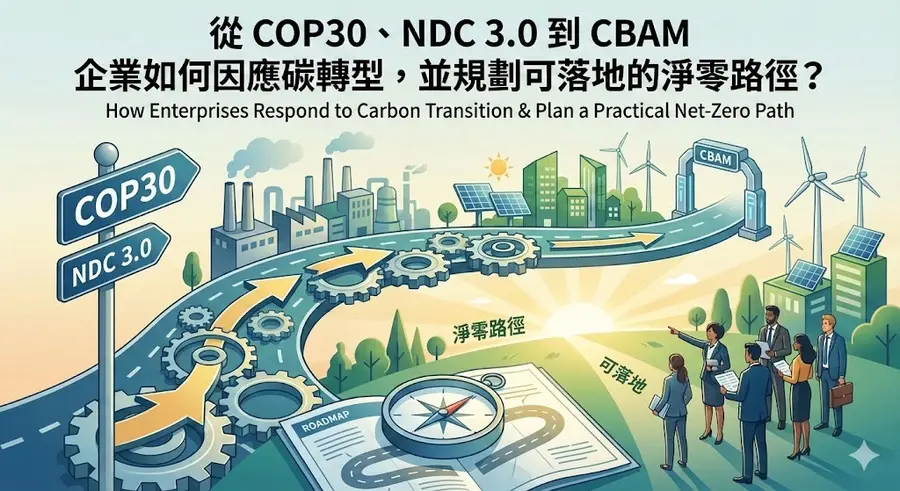
As global climate governance accelerates and carbon costs become increasingly internalized, enterprises no longer face just the question of 'whether to reduce emissions' but rather 'how to complete transformation ahead of time amid uncertain international consensus and increasingly clear regulatory frameworks.' This article explores international trends from COP30, NDC 3.0 emission reduction targets across countries, and the practical impacts of EU CBAM and Taiwan's carbon fee system, helping you understand the key aspects and strategic directions enterprises should focus on during carbon transition.

Oct 08, 2025
How Are Japan and the EU Positioning Green Energy? Cross-National Comparison and Corporate Strategies (Part 2)
In the complex chess game of global energy transition, each country's strategic positioning is full of differences. Following the previous article's in-depth analysis of the important roles and development directions of the US and China in nuclear energy and natural gas, this article shifts its perspective to two key economies in Asia and Europe: Japan and the EU. We will explore how these two major blocs are formulating green energy deployment and energy transition pathways in response to their unique geographical, economic, and political environments. The article will also highlight the specific green energy strategies that Japanese and EU companies have adopted to ensure their leading position in global competition amid pressure for global net-zero emissions.
Aug 27, 2025
Carbon Trading & Carbon Rights! 5 Key Trends in International Trading Markets | 2025 ICAP ETS Report
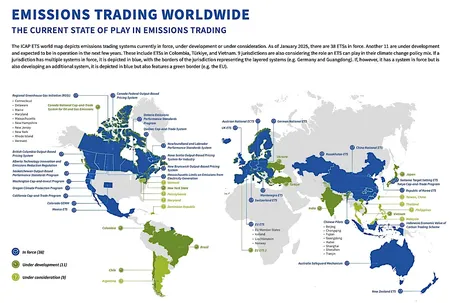
2025 marks the 10th anniversary of the Paris Climate Agreement, yet global climate conditions are increasingly severe: the average temperature in 2024 exceeded pre-industrial levels by more than 1.5°C for the first time. Facing this challenge, Emission Trading Schemes (ETS) have become essential tools for countries to drive decarbonization. The "2025 Global Emissions Trading Status Report" published by the International Carbon Action Partnership (ICAP) provides global trend insights, covering 38 operational ETS systems worldwide. These systems cover 23% of global greenhouse gas emissions (approximately 12 GtCO₂e), affecting one-third of the global population and 58% of GDP. This report not only tracks global trends but also covers expanding emerging markets, price fluctuations in national ETS systems, how quotas generated by national ETS are used, and emphasizes the role of ETS in the net-zero transition.
May 28, 2025
Complete Guide to Global Carbon Market Systems: From Cap-and-Trade to Taiwan's ETS Pilot Program
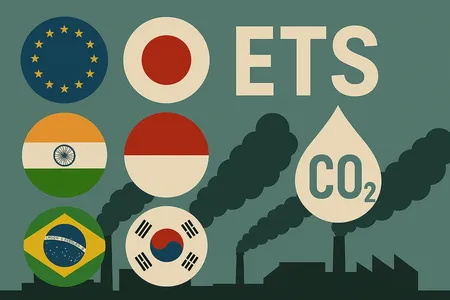
In 2025, Taiwan's carbon fee system officially launched, followed by a cap-and-trade emissions trading system (ETS) pilot program in 2026, moving toward a dual-track carbon pricing system aligned with global standards. Facing impacts from international regulations like CBAM, how can businesses position themselves ahead? This article provides an in-depth analysis of ETS system designs and implementation status in the EU, Japan, South Korea, and various emerging economies, helping businesses deploy corresponding strategies and actions in advance.

Apr 30, 2025
From Trump's Paris Agreement Withdrawal to Taiwan's 2050 Net Zero Anchor: What Are the New Focus Points for Corporate Supply Chain Decarbonization?
In early 2025, Trump claimed he would withdraw from the Paris Agreement again, seemingly weakening global climate governance consensus. In reality, ESG has long become the operational culture of top international enterprises. Taiwan has also anchored its future at this time - President Lai Ching-te explicitly stated at the National Climate Change Response Committee meeting that Taiwan's 2050 net-zero target will not waver with international political developments. More noteworthy is that the Ministry of Environment plans to officially announce carbon sequestration regulations in mid-2025, which will be a turning point for corporate supply chain decarbonization and Scope 3 management. This article analyzes how enterprises should seize this transformation opportunity!
Apr 16, 2025
Tariff Policies Change Overnight! Learning Corporate Decarbonization Survival Rules from Trump Tariffs
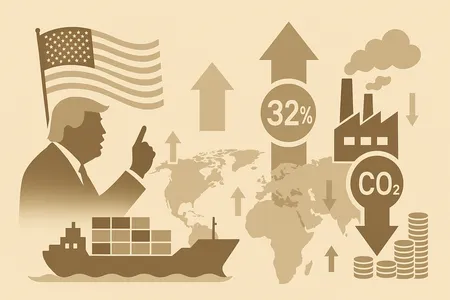
Trump's tariff policy U-turn reveals the nature of policy risk. Facing the upcoming implementation of carbon tariffs led by CBAM, only enterprises that are well-prepared can maintain competitiveness amid change.

Apr 09, 2025
Relaxing Sustainability Reporting Requirements? Changes EU Omnibus Package Will Bring to CSRD and CBAM
The newly proposed EU Sustainability Simplification Omnibus Package aims to simplify corporate sustainability reporting. Regulations proposed for relaxation include the Corporate Sustainability Reporting Directive (CSRD), Carbon Border Adjustment Mechanism (CBAM), and more. Here's a comprehensive overview of the key changes:

Mar 13, 2025
What is CBAM? CBAM Postponed to 2027: Impact on Taiwanese Enterprises
EU CBAM delayed to 2027, how should Taiwanese enterprises respond? This article analyzes the CBAM mechanism, affected industries, and response strategies to help businesses grasp future carbon trading trends.

Mar 02, 2025
Weekly ESG Trends: Latest Sustainability Updates Feb 24 - Mar 2
As ESG (Environmental, Social, and Governance) becomes a core part of corporate strategy, major global economies are experiencing significant changes in regulatory policies, corporate commitments, and market responses. Here's a summary of key global ESG news from February 24 to March 2, 2025, to help companies stay updated on the latest trends.

Feb 07, 2025
Trump Announces Paris Agreement Withdrawal Again, Yet It's the Perfect Opportunity for Taiwan Enterprises to 'Overtake' Major Players?!
On January 20, 2025, with the announcement of the US withdrawal from the Paris Agreement, global carbon reduction efforts faced significant impact. As the world's second-largest carbon emitter, the US's reduced commitment to climate agreements not only weakens the coordination of international cooperation but may also cause some countries and enterprises to relax their carbon reduction efforts. However, supply chain pressure has not diminished, especially as the EU and other regions maintain strict carbon emission management requirements, with global brands and purchasers still requiring supply chain partners to maintain high-standard carbon inventory capabilities.
- 1
- 2