
Consultant Column
Popular Keywords:
There are 29 results for "Carbon Inventory".
Jul 23, 2025
Don't Know How to Conduct Carbon Inventory for Four Industry Types? Taiwan EPA Releases New Calculation Tools and Carbon Inventory Guidelines!
Following the policy direction of the expanded carbon inventory announcement in March this year, Taiwan's Ministry of Environment released greenhouse gas inventory guidelines for four industry types on July 14, covering service industries, transportation, medical institutions, and universities. Additionally, a carbon emission calculation tool was introduced to help businesses preliminarily calculate their carbon emissions. This update is great news for regulated businesses, significantly reducing the administrative costs required for inventory operations. This article will reveal all the details of this information.
Jun 25, 2025
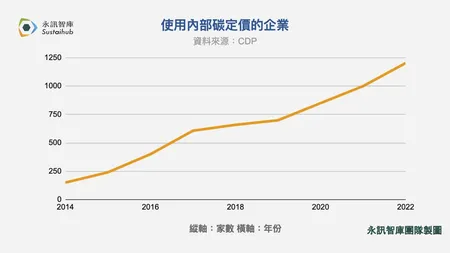
2025 Corporate Carbon Strategy Trends: Internal Carbon Pricing Drives Both Decarbonization and Competitiveness
As global attention to climate change continues to increase, businesses face not only external pressure but also the need for internal transformation. Internal carbon pricing serves as an important tool for corporate sustainable development, helping businesses consider carbon emission costs when formulating strategies, thereby driving the transition to a low-carbon economy. Despite its clear advantages, businesses face a series of challenges during implementation, including internal resistance, resource allocation, and market volatility. This article will explore how internal carbon pricing can help businesses succeed in green transformation and provide specific strategies and recommendations.
Jun 05, 2025
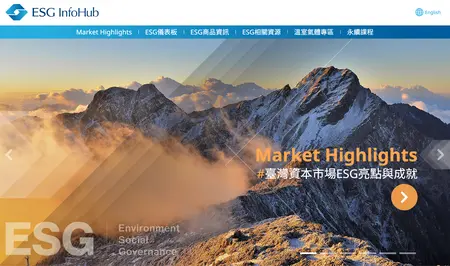
From Disclosure to Decision-Making: How TWSE ESG Digital Platform Supports Corporate Sustainability Transformation
Facing the global sustainability wave and information disclosure trends, businesses and investors have increasingly urgent needs for ESG information. To help stakeholders more effectively grasp the sustainability pulse of Taiwanese companies and markets, the Taiwan Stock Exchange has launched the ESG InfoHub digital platform, integrating key sustainability data from official institutions to provide one-stop information inquiry and comparison functions.
May 28, 2025
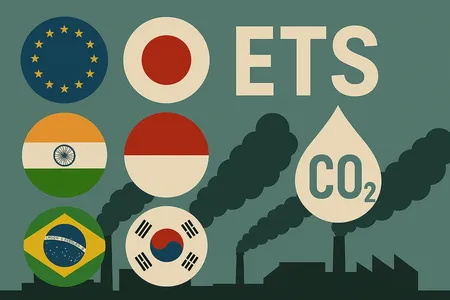
Complete Guide to Global Carbon Market Systems: From Cap-and-Trade to Taiwan's ETS Pilot Program
In 2025, Taiwan's carbon fee system officially launched, followed by a cap-and-trade emissions trading system (ETS) pilot program in 2026, moving toward a dual-track carbon pricing system aligned with global standards. Facing impacts from international regulations like CBAM, how can businesses position themselves ahead? This article provides an in-depth analysis of ETS system designs and implementation status in the EU, Japan, South Korea, and various emerging economies, helping businesses deploy corresponding strategies and actions in advance.

Apr 30, 2025
From Trump's Paris Agreement Withdrawal to Taiwan's 2050 Net Zero Anchor: What Are the New Focus Points for Corporate Supply Chain Decarbonization?
In early 2025, Trump claimed he would withdraw from the Paris Agreement again, seemingly weakening global climate governance consensus. In reality, ESG has long become the operational culture of top international enterprises. Taiwan has also anchored its future at this time - President Lai Ching-te explicitly stated at the National Climate Change Response Committee meeting that Taiwan's 2050 net-zero target will not waver with international political developments. More noteworthy is that the Ministry of Environment plans to officially announce carbon sequestration regulations in mid-2025, which will be a turning point for corporate supply chain decarbonization and Scope 3 management. This article analyzes how enterprises should seize this transformation opportunity!
Mar 21, 2025
[2025 Carbon Fee Guide] How Enterprises Can Reduce Carbon Fees from NT$300 to NT$50 Through Voluntary Reduction Plans
With the Climate Change Response Act officially in effect, the carbon fee system has become one of the operational costs that Taiwanese enterprises must take seriously. Companies subject to government-regulated carbon fee collection, including power, gas supply, and manufacturing industries with annual direct or indirect greenhouse gas emissions reaching 25,000 metric tons of CO₂e, will need to pay carbon fees of up to NT$300 per ton of CO₂e. Facing carbon fee pressure, the key for enterprises to reduce payment amounts lies in proposing and passing a 'Voluntary Reduction Plan,' which qualifies them for preferential rates of NT$50 or NT$100 per ton. This article explains how systematic planning and reporting for voluntary reduction plans can not only legally save expenses but also help enterprises with long-term net-zero planning.

Mar 13, 2025
What is CBAM? CBAM Postponed to 2027: Impact on Taiwanese Enterprises
EU CBAM delayed to 2027, how should Taiwanese enterprises respond? This article analyzes the CBAM mechanism, affected industries, and response strategies to help businesses grasp future carbon trading trends.
Feb 26, 2025
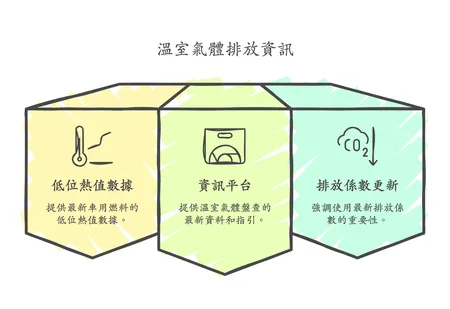
Ministry of Environment's Latest GHG Emission Factors Now Online - Avoid Using Outdated Version 6.0.4!
Facing increasingly stringent environmental regulations, using correct emission factors in GHG inventories is crucial for ensuring corporate carbon inventory data is compliant and accurate.

Feb 07, 2025
Trump Announces Paris Agreement Withdrawal Again, Yet It's the Perfect Opportunity for Taiwan Enterprises to 'Overtake' Major Players?!
On January 20, 2025, with the announcement of the US withdrawal from the Paris Agreement, global carbon reduction efforts faced significant impact. As the world's second-largest carbon emitter, the US's reduced commitment to climate agreements not only weakens the coordination of international cooperation but may also cause some countries and enterprises to relax their carbon reduction efforts. However, supply chain pressure has not diminished, especially as the EU and other regions maintain strict carbon emission management requirements, with global brands and purchasers still requiring supply chain partners to maintain high-standard carbon inventory capabilities.