
Why Is Japan Returning Nuclear to Baseload and Natural Gas as a Transitional Solution?
Green Energy Definition and Perspective
Japan's definition of renewable energy aligns with international mainstream, including solar, wind, geothermal, hydropower, and biomass. However, its strategic perspective on nuclear energy has undergone a major transformation in recent years. In the "7th Strategic Energy Plan" passed in February 2024, the Japanese government officially placed nuclear energy alongside renewable energy as "decarbonized power sources" and explicitly proposed to "maximize the use" of both energy sources. This marks a major shift from Japan's policy to "minimize nuclear dependence as much as possible" following the 2011 Fukushima nuclear disaster.
This shift in Japan's energy policy is a pragmatic choice that comprehensively considers technical bottlenecks, geopolitical risks, and domestic economic needs. Japan has limited land area and restricted space for renewable energy development, while emerging industries such as AI have also led to surging electricity demand. In this context, re-embracing nuclear energy that can provide stable baseload power has become a "realistically feasible" path to ensure simultaneous achievement of energy security, economic growth, and emission reduction targets.
Current Status and Trends
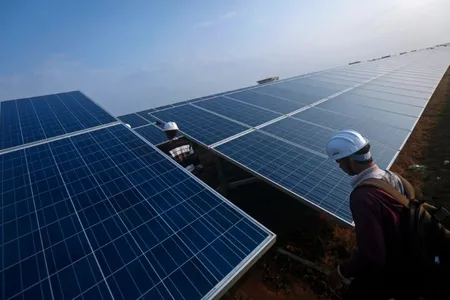
As of 2023, Japan's renewable energy share was 22.9%, but solar energy, which has mainly driven green energy development in the past, has encountered bottlenecks due to limited land. The new Energy Basic Plan sets more ambitious goals, planning to increase the renewable energy share to 40% to 50% by 2040, double the current ratio, while maintaining the nuclear energy share target at 20%. To achieve these goals, Japan needs to accelerate the adoption of emerging technologies such as offshore wind power and geothermal power generation, and promote the restart and reconstruction of existing nuclear power plants.
Regulatory Framework and Policy Measures
Japan's energy policy system uses the "Energy Basic Plan" as its top-level design, which is revised every three years to provide macro guidance for long-term goals. At the specific regulatory level, Japan has created the "Building Renewable Energy Utilization Promotion Zone" system, aimed at encouraging the installation of renewable energy equipment in suitable areas, and promoting through special permits such as floor area ratio and height restrictions. In addition, Japan guides the development of renewable energy generation businesses through setting "benchmark prices" and bidding mechanisms.
This multi-pronged gradual transformation path aims to balance the stability of energy supply with emission reduction targets, and gradually rebuild trust in nuclear energy under the social shadow of the Fukushima nuclear disaster.
The Role of Nuclear Energy and Natural Gas
In the new energy policy, the role of nuclear energy has fundamentally changed. The new plan explicitly mentions for the first time that next-generation innovative reactors will be built on the original sites of nuclear power plants that have been decided to be decommissioned, the so-called "demolition and reconstruction." This indicates that Japan is actively seeking to return nuclear energy to the core position of baseload power while ensuring safety.
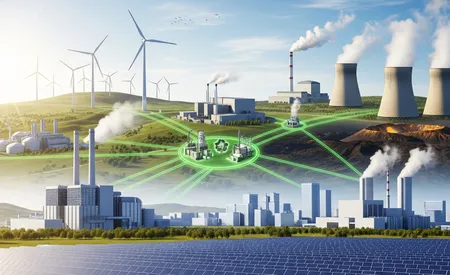
Natural gas is positioned as a "transitional energy source before achieving carbon neutrality" and is seen as a "realistic solution" to cope with growing electricity demand. The Japan Transmission System Operators Association expects that by 2034, the total capacity of LNG power generation units will increase to ensure supply stability. Japan's energy strategy shows a "dual transition" characteristic: from high-carbon coal to natural gas, while also transitioning from old-style nuclear power to next-generation nuclear technology. This strategy acknowledges the reality that renewable energy cannot completely replace fossil fuels and nuclear energy in the short term, and hedges supply risks in energy transition by signing long-term LNG contracts.
Controversies in EU Energy Transition: How Do Member State Divisions Affect Policy Implementation?
Green Energy Definition and Perspective
The EU Taxonomy Regulation aims to guide private capital toward sustainable economic activities. Through a science-based classification system, it aims to define which economic activities make a "substantial contribution" to achieving the EU's environmental goals. By marking economic activities that meet the standards as green investment targets, it attracts more private funds to achieve the goals of the EU's "European Green Deal," and provides clear standards for businesses and investors to avoid exaggerating environmental actions and ensure funds flow to projects that truly contribute to climate and environmental policies.
Its most controversial decision was to include nuclear energy and natural gas in the "sustainable classification" under strict conditions. This decision does not simply label them as "green," but defines them as "transitional activities" and sets strict technical and timeline conditions.
Conditions for nuclear energy include: new nuclear power plants must obtain construction permits by the end of 2045; existing nuclear power plant life extensions must obtain permits by the end of 2040. In addition, facilities must meet the highest nuclear safety standards, have complete high-level radioactive waste and fuel management plans, and ensure that final geological disposal facilities can be operational by 2050.
Conditions for natural gas include: new natural gas power plants must obtain construction permits by the end of 2030, and ensure that their power generation emissions are below 270 grams of CO₂e per kWh, or do not exceed 550 kg CO₂e/kW on a 20-year average. They must also have hydrogen or other low-carbon gas transition capabilities and commit to gradually switching fully or partially to low-carbon or renewable fuels after 2035.
This move by the EU is a major compromise between its decarbonization idealism and energy supply reality. It acknowledges the need for stable "bridge energy" to fill gaps in the process of phasing out coal, especially in the context of the Russia-Ukraine war exacerbating energy security challenges.
Current Status and Trends
Renewable energy share: According to the latest data, the EU's renewable energy power generation share reached 46.9% in 2024. Among these, solar power generation exceeded coal for the first time, becoming the main force of EU electricity production, while fossil fuel power generation share dropped to a historic low of 29%.
Policy targets: Under the "Fit for 55" package, the EU revised the Renewable Energy Directive (RED III), significantly increasing the share of renewable energy in final energy consumption by 2030 from the original 32% to 42.5%, and setting a symbolic additional target of 45%.
Energy structure: Although the renewable energy share is growing rapidly, nuclear energy remains the EU's main power source, accounting for 23.7% in 2024. This highlights the key role of transitional energy sources such as nuclear and natural gas in maintaining energy supply stability before renewable energy becomes fully universal.
The EU's core goal is to achieve climate neutrality by 2050 and has proposed the "European Green Deal" as the overall framework. However, despite unified policies, serious divisions remain among member states. Pro-nuclear countries like France strongly support the inclusion of nuclear energy, while anti-nuclear countries like Germany and Austria firmly oppose it. This shows that even in the highly integrated EU, internal divisions are difficult to avoid on issues like energy that are deeply tied to national sovereignty and security, leading to fragmentation in policy implementation.
Regulatory Framework and Policy Measures
The "European Green Deal" is an overall framework covering multiple areas including energy, transportation, agriculture, and circular economy. One important tool is the "Carbon Border Adjustment Mechanism (CBAM)," which aims to collect carbon fees on imported products equivalent to the EU's internal carbon emissions trading system to prevent "carbon leakage" and encourage global emission reductions. The EU has also established a "Just Transition Mechanism" to assist regions and workers dependent on fossil fuels or high carbon emissions, ensuring fairness in the transition process. The EU is trying to transform its climate policy from a purely internal affair into a "global standard" that affects global trade and industry, using its huge market power to push other countries to align with its standards, which is also a new international economic competition strategy.
Cross-National Comparison and Strategic Insights
Core Insight: Diversity of Energy Transition Pathways
The analysis in this report reveals that despite global convergence on net-zero emission targets, there are fundamental differences in countries' transition pathways. These differences are mainly based on the following core factors:
Economic structure and politics: China and the US represent two different models of state-led and market-driven approaches respectively.
Geopolitics: The US and Japan combine energy transition with geopolitical tools (LNG exports) and energy security (nuclear restart), showing that energy policy has transcended the purely environmental realm.
Technical maturity: Countries' choices between nuclear energy and natural gas reflect widespread concerns about the incomplete maturity of renewable energy technologies (especially storage and grids).
For ease of understanding the fundamental differences in each country's strategy, the following table provides a detailed comparison from multiple dimensions.
Overview of Green Electricity Definitions and Policy Tools in Major Countries Worldwide

Conclusion and Outlook
The global energy transition does not follow a single model but presents a complex picture of adaptation to local conditions and diverse strategies. Each country's energy transition pathway is deeply rooted in its unique geographical, economic, and political environment. The US dual-track model combines market mechanisms with government intervention, aiming to balance innovation and risk. China's state-led model demonstrates the powerful ability to achieve ultra-large-scale deployment under a single policy objective. The pragmatic choices of Japan and the EU highlight deep consideration of energy supply stability and geopolitical realities while pursuing decarbonization ideals.
The positioning of natural gas and nuclear energy is the most common and controversial issue in the current energy transition. Despite environmental and safety concerns, they are considered important transitional or baseload energy sources in the vast majority of countries, used to fill the technical gap of renewable energy intermittency and ensure the reliability and security of energy supply. This indicates that in the foreseeable future, a transition path relying solely on renewable energy does not yet have global applicability.
Looking ahead, the global energy transition will be a continuously evolving process full of variables. Technological innovation, especially the development of small modular reactors (SMR), green hydrogen, and advanced energy storage technologies, will continue to shape each country's energy landscape. At the same time, energy transition will no longer be merely a technical and environmental issue but a complex strategy deeply intertwined with national security, economic competition, and geopolitics. Understanding each country's unique pathway and potential motivations is crucial for assessing the future dynamics of the global energy market.
References
Cabinet Decision on the Seventh Strategic Energy Plan
Commission Delegated Regulation (EU) 2022/1214 — Complementary Climate Delegated Act
European Commission – Q&A on Complementary Climate Delegated Act
Electricity from renewable sources reaches 47% in 2024
Your guide to the RED III Directive: What this means for biofuels
Europe posts record year for clean energy use as Trump pulls US toward fossil fuels