In recent years, extreme weather events have been increasing in both frequency and intensity, profoundly impacting not only natural environments but also reshaping global economic and policy priorities. Against this backdrop, "accelerating energy transition" has become a core component of the global sustainability agenda.
This article analyzes the growth trajectory of renewable energy worldwide and the underlying investment and financing logic through the latest data and case studies, exploring how consultants can help businesses and policymakers find balance between "energy economics" and "sustainability goals."
Renewable Energy Investment Trends
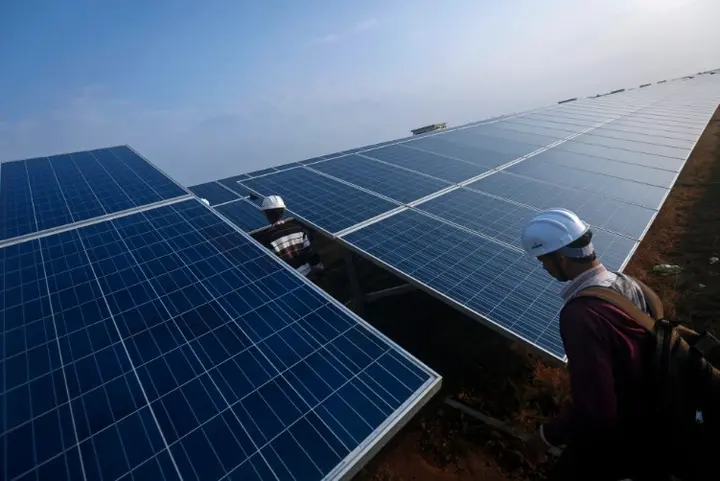
According to the International Energy Agency (IEA) report, despite geopolitical tensions and market volatility, global investment in clean energy technology and infrastructure this year will be twice that of fossil fuels. It is also estimated that approximately $3.3 trillion will flow into the energy sector in 2025, a 2% increase from 2024.
Meanwhile, BloombergNEF (BNEF)'s annual report, Energy Transition Investment Trends 2025, estimates that investment in renewable energy will reach $728 billion in 2025, including investments in wind (onshore and offshore), solar, biofuels, biomass and waste, ocean, geothermal, and small hydro, demonstrating continued international enthusiasm for renewable energy investment.
However, it's worth noting that investments in emerging technologies such as electric heating, hydrogen, carbon capture and storage (CCS), nuclear, clean industry, and clean shipping totaled only $155 billion, down 23% year-over-year, indicating that investment trends and preferences within the renewable energy sector still vary.
Overall, investors are now beginning to further evaluate the differences between various renewable energy sources when allocating funds. While some projects have seen funding declines, overall renewable energy investment trends remain positive and are expected to continue rising. However, current growth still falls short of net-zero requirements. According to BNEF estimates, global energy transition investment needs to average $5.6 trillion annually from 2025 to 2030 to achieve global net-zero emissions by 2050 under the Paris Agreement. Based on the IEA's estimated $3.3 trillion this year, there remains a funding gap of over 50% annually.
Have Fossil Fuels Been Phased Out?

As global energy demand rises, investment in fossil fuels remains high despite renewable energy contributions. Taking China and India's investments last year as examples: in 2024, China approved nearly 100 GW of new coal-fired power plants for energy security reasons; India approved approximately 15 GW of coal-fired power plants, pushing global approvals to their highest level since 2015.
However, the IEA estimates that oil investment will decline this year due to economic uncertainty, declining demand expectations, and weak prices, marking the first decline in oil investment in a decade outside of the COVID-19 pandemic year. For coal, the IEA expects coal supply investment to increase by 4% this year, significantly slowing compared to the 6% annual average growth rate over the past five years.
Overall, since COP28, fossil fuel growth has shown a weakening trend but continues to receive investment. Stronger investment transition plans are needed to achieve net-zero goals.
Consultant's Perspective: Select Your Targets and Actively Invest in Renewable Energy
Many companies often ask: "Has the renewable energy trend already peaked?" and "Will investing in renewable energy reduce revenue?"
Let's discuss this from two perspectives. From the net-zero by 2050 angle, based on the information above, current investment is far from sufficient. So if you have decarbonization goals or face pressure to reduce emissions, it's advisable to invest early to maximize carbon reduction benefits.
From a financial perspective, in recent years the world has entered an era where carbon has a price, meaning carbon reduction benefits and revenue are no longer mutually exclusive. Going further, from a fundraising perspective, observing current global trends shows that capital continues to flow into renewable energy and is rising. We can expect that investing in renewable energy offers good returns in terms of fundraising, carbon reduction benefits, and long-term operations.
However, different renewable energy projects can be further evaluated. The most suitable targets should be selected based on company profile, geographical environment, capital chain, and other factors.