
How SMEs Can Meet Customer Carbon Inventory Requirements: From 'Form-Filling' to 'Precise Data' — Delivering High-Quality Carbon Data
When small and medium enterprises face carbon inventory requests from their customers, the key is delivering high-quality, credible data. Strengthening data accuracy and completeness through on-site investigation lets SMEs effectively respond to customer expectations, stabilize order sources, and gradually build the trust foundation for long-term partnership. This article walks through supply chain carbon inventory practice, explains how on-site material surveys improve supplier data quality, and draws on real project results to show how SMEs can reinforce customer collaboration resilience and move toward more stable sustainable development.
What to decide after reading If you came for emission factors, ISO 14064, CBAM, or carbon data, the next step is to check whether activity data, emission factor versions, and supporting evidence can be traced.
Table of Contents
- 1. Why SMEs Feel Powerless Against Supply Chain Decarbonisation Pressure
- 2. From "Form-Filling" to "On-Site Investigation": What a Carbon Inventory That Actually Creates Value Looks Like
- Strategy 1: Data Precision — On-Site Material Surveys Inside the Facility
- 3. Supplier Feedback: From "It Felt Meaningless" to "Finally, a Real Result"
- 4. Why "Data Accuracy" Directly Affects Orders
- 5. Conclusion: Carbon Inventory Is Not Homework — It Is Part of Your Competitive Position
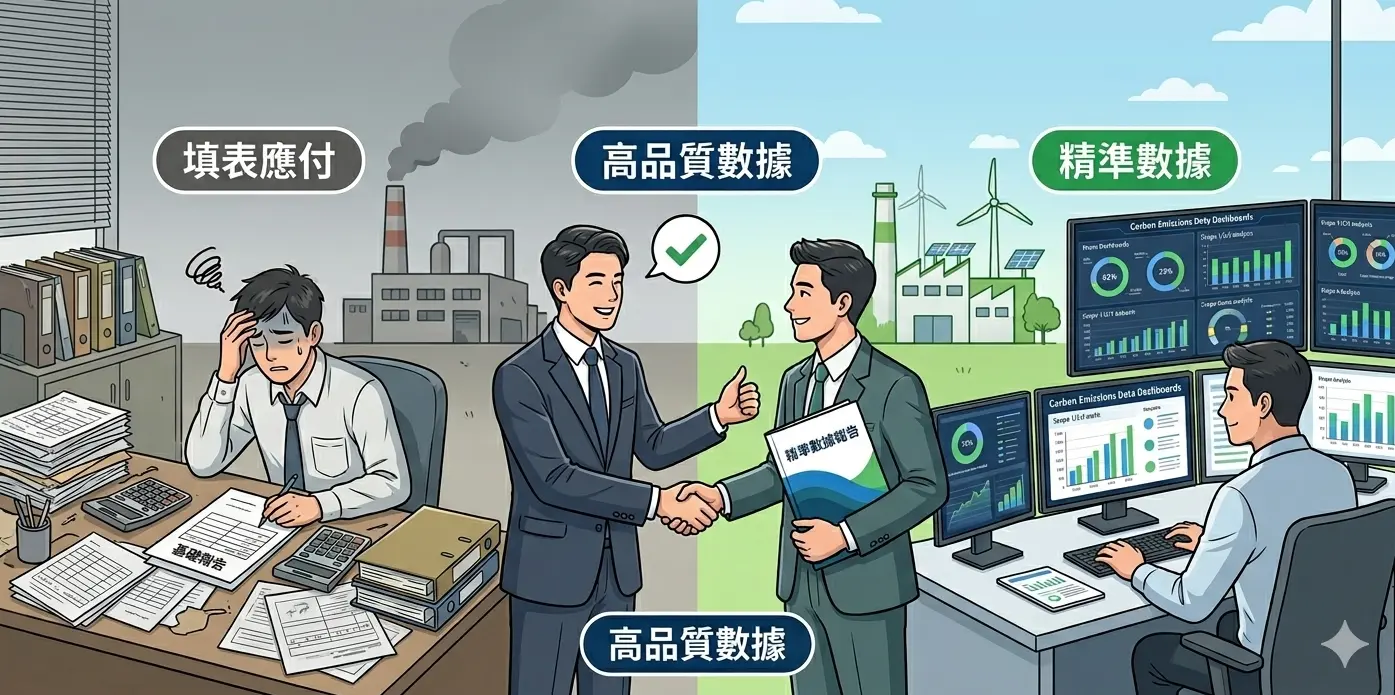
1. Why SMEs Feel Powerless Against Supply Chain Decarbonisation Pressure

As ESG and net-zero become core operating priorities, large enterprises no longer evaluate suppliers only on price and quality. "Sustainability capability" is rapidly becoming a key selection criterion.
Especially in telecoms, technology and manufacturing, Scope 3 supply chain emissions are increasingly within the management perimeter, and companies now routinely ask suppliers for carbon inventory data, with downstream implications for future contracts.
For most SMEs, however, the reality is:
- Lacking internal headcount and specialist know-how
- Unclear which data points customers actually care about
- Overwhelmed by complex forms and platforms
The result is reactive form-filling — "we finish the sheet but do not really understand the numbers" — and difficulty responding when customers follow up.
2. From "Form-Filling" to "On-Site Investigation": What a Carbon Inventory That Actually Creates Value Looks Like
In Sustaihub's supply chain management project for a leading Taiwan telecoms operator, suppliers ranged across electronic components, piping materials and other categories, with most being SMEs under 50 employees.
During the engagement, Sustaihub observed a critical pattern: "Most suppliers running carbon inventory projects stop at 'filling in the data' and never truly understand where the numbers come from."
Sustaihub therefore applied a very different data-collection strategy for suppliers.
Turn this article into your next step
If this article touches disclosure, carbon inventory, or report preparation, use the system or database to check how peers handle it.
Strategy 1: Data Precision — On-Site Material Surveys Inside the Facility
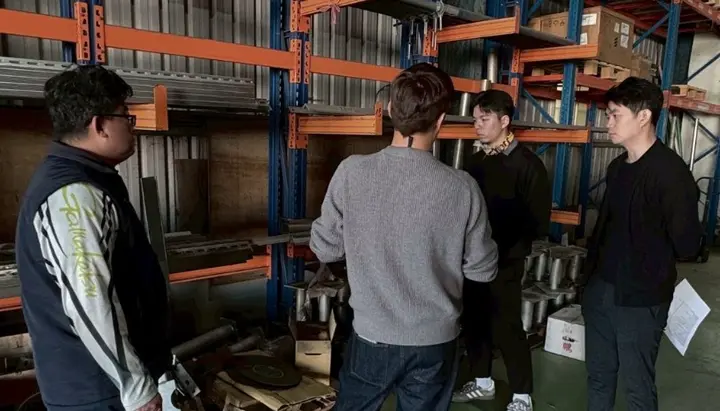
We visit the facility in person to confirm material weights, dimensions and composition, cross-check equipment models and actual use cases on the shop floor, and reconcile document records against on-site reality to prevent incorrect emission factors from being applied due to data gaps.
Strategy 2: Data Structuring as a Foundation for Future Calculations
Inventory outputs are not just for this year's deliverable — they are organised into a standardised format that becomes the baseline for subsequent annual inventories and ongoing optimisation, lowering the cost of repeated work each year.
This approach produces a clear outcome: carbon data is no longer an estimate but "verifiable data" grounded in real operations, and it can be reused across future project cycles.
3. Supplier Feedback: From "It Felt Meaningless" to "Finally, a Real Result"
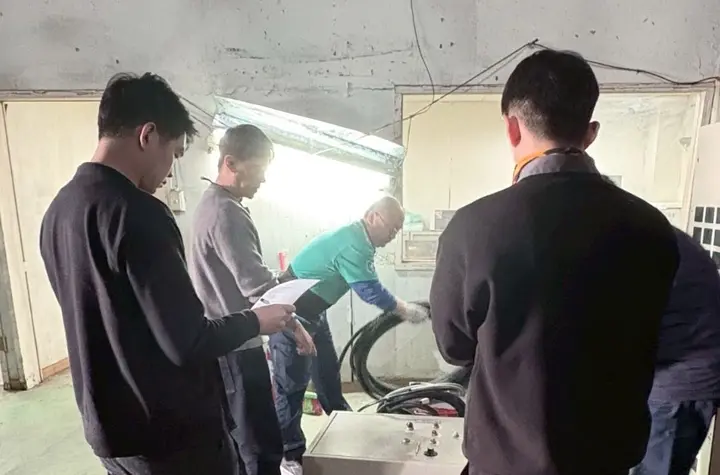
During one supplier interview — an SME with around 50 employees that supplies piping materials to its customer — the owner gave a very direct piece of feedback:
"For the past few years, doing a carbon inventory just felt like filling in an online form. This time, seeing the consolidated results, it really feels like there is substance to it."
He also recalled asking other consultants in the past: "Given where we are today, how do we actually bring emissions down?" The answer was "we will discuss it later", with no concrete recommendation ever provided.
By comparison, the value of this project showed up on two fronts:
On the system side
- Simple to operate, and the consolidated data can be handed to the customer directly
- Less repeated communication and back-and-forth data confirmation
On the data side
- Emission results are clear and traceable
- Capable of directly answering customer requirements
"For a company, the most important outcome of a carbon inventory is that it actually produces a result — and shows you what to improve next."
4. Why "Data Accuracy" Directly Affects Orders
In a supply chain setting, the impact of carbon data quality extends well beyond internal management. The critical point is this: every year large enterprises (i.e. the suppliers' customers) must complete group-level carbon inventory assurance, and their Scope 3 (Categories 3–6) emissions data comes in large part from data supplied by their suppliers.
In other words, the data quality a supplier delivers directly determines whether the customer can pass third-party assurance. If assurance stalls because the data is incomplete or wrong, the supplier–customer relationship comes under pressure and future orders are the first thing to suffer.
Through on-site investigation and data verification:
- Carbon calculations become more accurate and consistent
- Results reflect actual operations (avoiding misapplied emission factors)
- Assurance risk is materially reduced
In this supply chain project, a solid data foundation helped several suppliers complete their inventories and, in turn, helped the customer pass third-party group assurance smoothly.
When carbon inventory is done right, SMEs are not merely "meeting requirements" — they are "strengthening the customer relationship".
5. Conclusion: Carbon Inventory Is Not Homework — It Is Part of Your Competitive Position
Supply chain decarbonisation is no longer optional; it is a prerequisite for continuing to win orders.
An effective carbon inventory is not simply a report you ship once — it is a data foundation the customer can read, third-party assurance can pass, and future decarbonisation decisions can rely on. When this data is trustworthy, the relationship between supplier and customer is more robust as well.
With Sustaihub's cloud carbon inventory platform and consulting support, SMEs can:
- Rapidly set up an inventory architecture that meets customer requirements
- Improve data quality and assurance pass rates
- Reduce internal coordination and operational overhead
Contact us now to build a correctly grounded data foundation, complete your carbon inventory, and strengthen order pipelines and stakeholder collaboration.
FAQ
View AllWhat are the main challenges SMEs face when conducting a carbon inventory?
The main challenges SMEs face when conducting a carbon inventory are a lack of internal staff and specialist knowledge, leaving them unsure which data customers actually value. Faced with complex forms and systems, many companies can only respond reactively. Some still do not understand what is being calculated even after entering the data, making it difficult to answer customer enquiries.
What strategies has Sustaihub used in supply chain management projects to improve carbon inventory data accuracy?
Sustaihub has adopted two main strategies in its supply chain management projects. The first is improving data precision through on-site material surveys at factories, verifying materials’ weight, dimensions and composition, and comparing documentary records with actual site conditions. The second is structuring data by organising inventory results into a standardised format to serve as the basis for future calculations and reduce the cost of repeated work.
Why does carbon data accuracy affect a company’s orders?
Carbon data accuracy directly affects orders because large companies must complete group-level carbon inventory assurance every year, and much of their Scope 3 emissions data comes from suppliers. Incomplete or incorrect supplier data can hold up customers’ assurance processes, affecting supplier–customer relationships and subsequent orders.
Turn Carbon Data into an Auditable Workflow
Use DCarbon to calculate emissions with the emission factors you configure and organize activity data and supporting evidence, so inventory data stays traceable, reviewable, and ready for customer requests.
How to decide the next stepTurn the regulation or factor requirements in the article into a data checklist first. If data crosses sites or departments, or needs verification, then evaluate whether system-based management is needed.