Key Analysis of the Third Wave of Mandatory Carbon Inventory
1. Scope Expansion
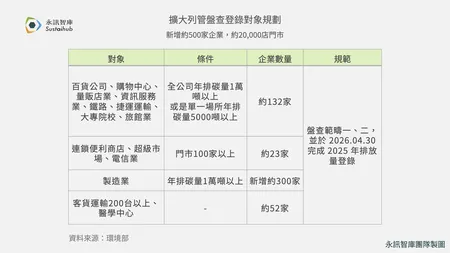
- Inclusion of high electricity-consuming industries, including department stores, hypermarkets, and telecommunications
- Expanded coverage of manufacturing industry, setting thresholds based on energy usage
2. New Threshold Estimates:
- Current threshold: 25,000 tons of annual carbon emissions
- New threshold may be lowered to 5,000 tons or more of annual carbon emissions (not yet confirmed)
3. List Announcement and Trial Period:
- The list is expected to be announced by the end of December, with reporting starting as early as August 2025.
The Ministry of Environment will soon announce the third wave of mandatory carbon inventory list, which will extend to high electricity-consuming department stores, hypermarkets, and telecommunications industries. According to reports, new thresholds will be set based on energy usage conditions, and manufacturing industry coverage will be expanded, with trial reporting starting as early as August next year.
Looking at the new threshold, it will be lower than the current 25,000 tons annual emissions threshold. Converting the new threshold to emissions, it may be revised down to 5,000 tons or more of annual carbon emissions requiring mandatory carbon inventory, but this is not yet confirmed, and the number of newly affected companies is still being estimated.
3 Key Points for Companies Covered by New Regulations
- Increased Compliance Costs: Carbon inventory implementation requires training internal professionals or external consultant support, relatively increasing short-term operating costs.
- Resource Allocation Pressure: Need to integrate multi-departmental data, especially energy usage data, increasing internal management difficulty.
- Market Competition Risk: Companies that fail to respond to new regulations in time may lose competitive opportunities in the market.
Low-Carbon Transformation Opportunity: Finding Opportunities in Challenges!
Although new regulations bring challenges, proactive response by companies also provides opportunities to enhance competitiveness:
1. Meet Procurement Requirements, Enter International Supply Chains
Many government procurement projects and large corporate supply chains are gradually requiring partners to have carbon inventory capabilities. If SMEs complete compliance earlier, they will significantly increase opportunities to enter supply chains and seize market opportunities.
[Case Study] Apple Calls on Global Supply Chain to Decarbonize by 2030 ▶️ Read More
2. Review Energy Consumption, Optimize Usage Efficiency
Gain in-depth understanding of energy usage conditions, comprehensively grasp energy usage during production and operations, identify high energy-consuming links and potential wasted resources. At the same time, effectively reduce long-term energy costs and further enhance corporate competitiveness.
3. Anticipate Regulations, Reduce Fine Risks
Domestic and international regulations are becoming increasingly strict. If companies can respond in advance, they will be more resilient. Early positioning can also help companies avoid high carbon taxes or fines in the future, reducing risks.
Carbon Inventory Regulations Coming Online, How Should Companies Respond?
To quickly adapt after new regulations are implemented, we recommend companies that have not yet conducted greenhouse gas inventory take the following actions:
1. Prepare Supporting Documents
Inventory existing energy usage data, including common items such as: water, refrigerants, natural gas, coal, fuel oil, etc., ensuring data completeness to lay the foundation for future reporting and verification.
2. Build Carbon Inventory Capability
Establish an internal dedicated team responsible for carbon emission data collection and inventory work. Can also collaborate with external consultants to ensure accuracy of carbon inventory and reporting.
3. Implement Digital Tools
Adopt digital carbon inventory systems to improve data processing efficiency and cross-department/site collaboration, enabling real-time tracking of carbon inventory data and rapid generation of visualized charts, significantly improving inventory efficiency.
Discover Enterprise Digital Management, Strengthen Sustainable Competitiveness!
Sustaihub's digital sustainability consulting team is dedicated to exploring how to effectively achieve corporate sustainability management goals!
Through the DCarbon System one-stop solution, jointly face complex and tedious sustainability management, effectively simplify inventory processes, provide precise and efficient data processing capabilities, moving from carbon anxiety to carbon management!
References: United Daily News