Which Standard Should I Choose for Different Situations?
When third-party verification and regulatory compliance are needed: Use ISO 14064 series
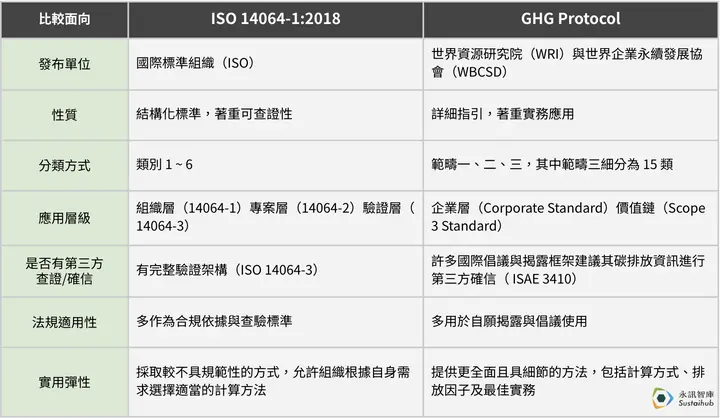
If your company is in a high-emission industry and must conduct mandatory inventory registration and verification under the "Climate Change Response Act," then ISO 14064-1 is the best choice. Combined with ISO 14064-3 for third-party verification, it meets both Taiwan's regulations and international verification requirements.
For those subject to FSC's greenhouse gas inventory disclosure requirements, either GHG Protocol or ISO 14064-1 can be used, with assurance standards following ISAE 3410 or ISO 14064-3.
Focus on internal carbon management and international initiative disclosure: Prioritize GHG Protocol
If your company is reporting to CDP, setting SBTi science-based carbon reduction targets, or responding to supply chain carbon reduction requirements, GHG Protocol provides clear scope classifications and rich Scope 3 categories (15 categories), enabling a deeper understanding of your complete carbon footprint.
Want to meet both verification and management needs: Combining both is most reliable
Many companies choose to use GHG Protocol as the inventory methodology guide, combined with the ISO 14064 series as the reporting and verification structure basis.
GHG Protocol provides detailed classifications and calculation methods for Scopes 1, 2, and 3, including how to collect data, estimate, and quantify each emission source, making it suitable for planning inventory scope, establishing emission inventories, and tracking carbon footprints. ISO 14064-1 provides a standardized framework that clearly specifies the principles and requirements for organizations when quantifying and reporting greenhouse gases, including how to design, manage, and present overall inventory results. Then, third-party verification is conducted according to ISO 14064-3, giving inventory results consistency and international credibility. Through this approach, companies can not only effectively grasp carbon emission sources but also produce formal reports with verification power and legal compliance basis, balancing practicality and compliance.
What Do Taiwan's Regulations Require?
Ministry of Environment (formerly EPA):
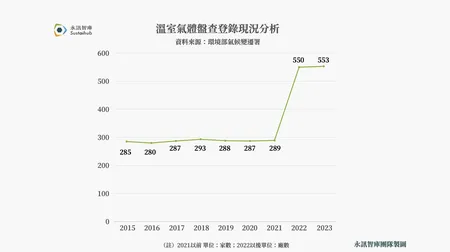
- According to Article 21 of the "Climate Change Response Act," designated emission sources must complete inventory, registration, and verification annually.
- Official operation guidelines clearly mention: ISO 14064-1 and GHG Protocol can be referenced during inventory; ISO 14064-3 is recommended for verification.
Financial Supervisory Commission (FSC):
- The "Sustainability Development Roadmap" requires all listed companies to complete inventory by 2027.
- It is expected to follow IFRS S2 requirements using GHG Protocol as the standard. Exception: If a jurisdiction's regulatory authority or stock exchange requires a different measurement method, entities may use that method instead of GHG Protocol. However, even if local regulations only require disclosure of partial greenhouse gas emissions (e.g., only Scope 1 and 2), entities must still disclose complete Scope 1, 2, and 3 greenhouse gas emissions as required by these standards.
How Does IFRS S2 Regulate GHG Information?
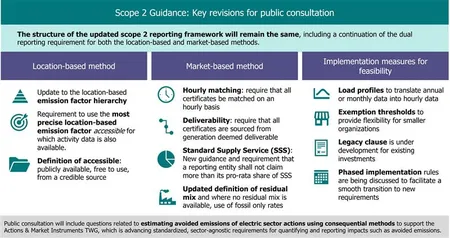
International Sustainability Disclosure Standard IFRS S2 explicitly requires companies to conduct inventory according to GHG Protocol and fully disclose Scope 1, 2, and 3 carbon emission information.
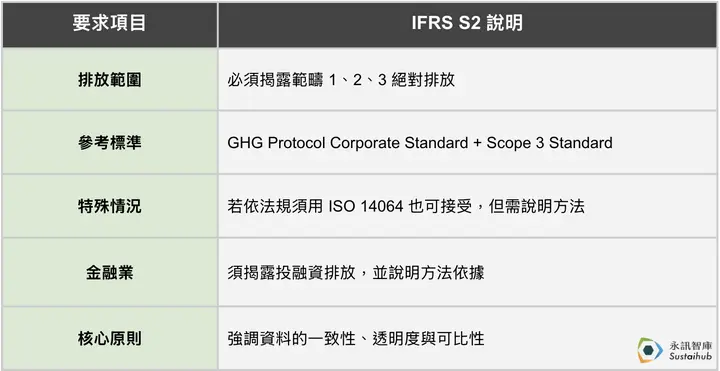
Note: GHG Protocol is the only GHG inventory standard explicitly designated by IFRS S2, but if Taiwan regulations require verification, ISO 14064 can also be used in conjunction.
From System Selection to Action Implementation: Building a Trustworthy Carbon Inventory System
In the international trend toward net-zero and disclosure transparency, companies are no longer conducting inventory just for compliance, but to establish a carbon information system that supports carbon reduction goals, investment decisions, and brand trust. Whether you choose the rigor of ISO 14064 or the flexibility and detail of GHG Protocol, the key is: "Clearly know what your goal is—choosing the right tool helps you go faster and further."
Companies are advised to adopt a mixed strategy to establish a carbon inventory framework that simultaneously meets regulatory, initiative, and investor expectations, paving the way for future alignment with IFRS S2 and net-zero transformation.