What is a Voluntary Reduction Plan?
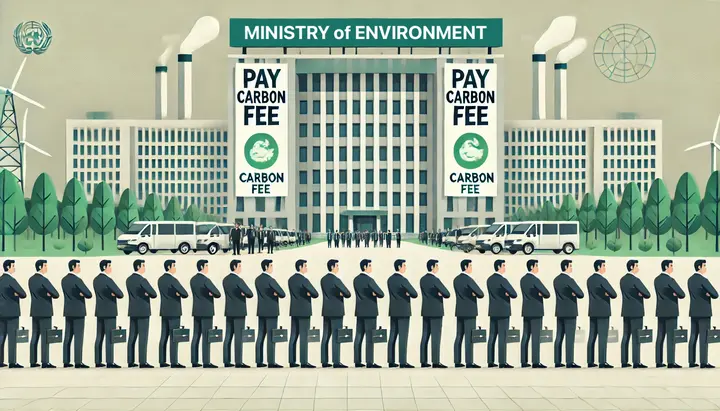
According to the Voluntary Reduction Plan Management Regulations, enterprises can apply for voluntary reduction plans to the Ministry of Environment before June 30 each year. If approved, preferential carbon fee rates apply for that year. Depending on the type of reduction strategy adopted, the following rates apply:
- Rate A | Industry-Specific | Designated Reduction Rate: NT$50 / ton CO₂e
- Rate B | Technology Benchmark | Designated Reduction Rate: NT$100 / ton CO₂e
Without submitting a plan, carbon fees are calculated at the standard rate of NT$300 / ton CO₂e.
How to Write an Application Plan?
To successfully obtain preferential rates, enterprises need to submit a detailed "Voluntary Reduction Plan Document" containing the following key information (according to Ministry of Environment announcement format):
- Basic enterprise information and emission boundary description: Explain plant layout, production process diagrams, main product output, and processes.
- Inventory baseline and target period setting: Can trace back to 2021, to the target year (2030), covering a complete medium-term decarbonization blueprint.
- Historical emission data and projected emission trends: Must list Scope 1, 2, 3 emission sources, fuel usage, purchased electricity, and other information.
- Proposed carbon reduction measures and benefit calculations: Including energy-saving equipment replacement, process optimization, renewable energy introduction, with clear calculation of expected reduction effectiveness.
- Implementation progress and budget planning: List expected completion progress, investment budget, and verification mechanism year by year.
From the above specifications, it's clear that the Ministry of Environment explicitly requires applicants to provide detailed descriptions of current status and future plans to facilitate progress tracking and verification of reduction results.
Choosing a Decarbonization Strategy: Industry-Specific vs. Technology Benchmark
To propose specific, compliant decarbonization strategies in the plan document, enterprises must choose applicable reduction paths based on their own conditions:
"Industry-Specific" Reduction Rate (Rate A: NT$50 / ton)
- Applicable to: Steel, cement, electronics, food, and other traditional and manufacturing industries.
- Reduction targets (2030 compared to base year 2021): For example, steel industry must achieve 25.2%, cement industry 22.3%, other industries 42% reduction rate.
- Features: Standards set according to industry characteristics, less flexibility but clear thresholds.
"Technology Benchmark" Designated Reduction Rate (Rate B: NT$100 / ton)
- Applicable to: Those with renewable energy, bioenergy, carbon capture, and negative carbon emission technologies.
- Features: Advanced technology verification required, must provide scientific evidence (such as LCA or third-party verification reports), more challenging but greater rate discount.
Glossary: Reduction rate — refers to the proportion of carbon emissions reduced through various measures between the base year (2021) and target year (2023).
Review and Verification: Carbon Reduction Commitments Must Be Honored
The Ministry of Environment implements a "pre-approval, post-verification" system for submitted plans:
- After application and approval, reduction targets, measures, rate categories, and verification methods will be approved.
- Before December 31 each year, the competent authority will verify the previous year's implementation. If targets are not met or violations are found, the standard NT$300 rate will be restored, and differential fees may be retroactively collected.
Therefore, enterprises should establish internal carbon reduction tracking mechanisms and contingency plans to ensure commitments are met on schedule and avoid increased tax burdens.
Conclusion: Transform Carbon Fees into Competitive Advantage, Starting with Filing
The carbon fee system is no longer future tense but present tense. Enterprises that simply pay fees without reducing carbon will face high expenditures and brand risks. Through voluntary reduction plans, enterprises can not only effectively save carbon fee expenses (from NT$300 to NT$50) but also establish a solid foundation for net-zero transformation.
This is not just a tax-saving tool but an essential path for enterprises toward green competitiveness. Start planning now and initiate applications to turn carbon fees from a burden into an opportunity to create value.
As a leader in carbon inventory systems, Sustaihub provides one-stop solutions to help enterprises facing carbon fee regulation from data collection to report generation, comprehensively meeting carbon management needs.
Click here to learn more and explore how our GHG system can easily complete carbon inventory, paving the way to sustainability for your enterprise!