Skip to content

FET Leads by Example, Partners with 3 Startup Champions to Build Net-Zero Ecosystem

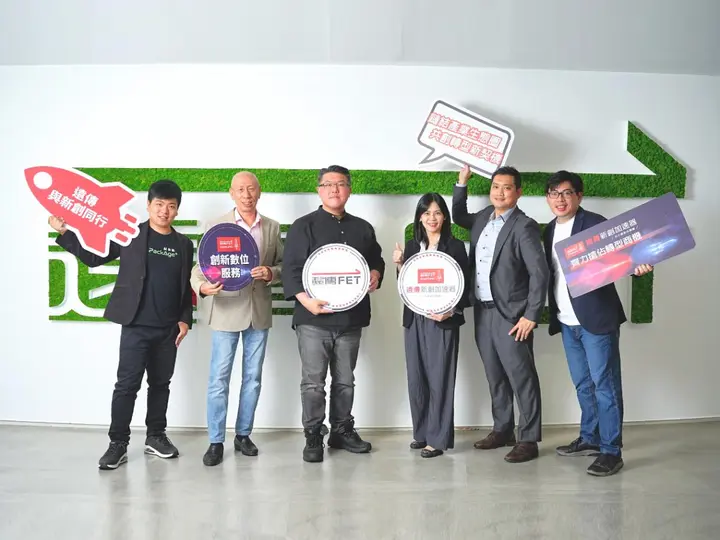
Net-zero carbon emissions by 2050 has become a global trend. Taiwan's Climate Change Response Act came into effect in February. According to the FSC's 'Corporate Governance 3.0 Sustainable Development Blueprint,' listed companies with paid-in capital exceeding NT$2 billion must submit corporate sustainability reports starting this year to strengthen disclosure of corporate sustainability and climate resilience information. To help enterprises move toward sustainability, the second FET Startup Accelerator has partnered with PackAge+, Sustaihub, and Yongcheng Intelligence - three startup champions - to successfully transform carbon anxiety into carbon business opportunities, leading smaller players to jointly build a net-zero ecosystem.

遠傳電信以大帶小攜手3新創精兵共築淨零生態系

遠傳電信以大帶小 攜手3新創精兵共築淨零生態系

The Industrial Revolution and linear economy's single-minded pursuit of maximizing profits has resulted in the world's top 100 cities contributing half of global GDP while consuming 2/3 of Earth's energy and producing 75% of greenhouse gas emissions. As extreme climate threats approach, the world is making every effort to combat them, triggering the international ESG wave and presenting unprecedented challenges and opportunities for corporate operations. Given the rapid climate change and the urgent need for global net-zero efforts, FET President Chee Ching believes that more startup teams need to join the collective effort to contribute to the net-zero mission. At the same time, FET hopes to develop green net-zero business opportunities together with startup partners and support the growth of the startup industry.

FET IT and Digital Transformation Technology Group Executive Vice President Hu De-min stated that to move toward sustainability, enterprises must simultaneously implement dual-axis transformation of digitalization and ESG green sustainability. "Transforming carbon anxiety into carbon business opportunities requires innovation - whether it's business model innovation, process innovation, or platform innovation. Startups are also key external forces driving innovative thinking in the industry. The FET Startup Accelerator connects industry and startups to create win-win outcomes." The FET Startup Accelerator carefully selects outstanding startup teams from diverse fields, sharing technology, business operations, and commercial profit models, providing innovative services by leading smaller players, enabling enterprises to gain trustworthy innovative assistance while helping startup partners connect with greater business opportunities. Starting now, the FET Startup Accelerator is launching its third phase recruitment, welcoming startups to apply.

Sustaihub Launches One-Stop ESG Intelligence Platform to Accelerate SME Dual-Axis Transformation
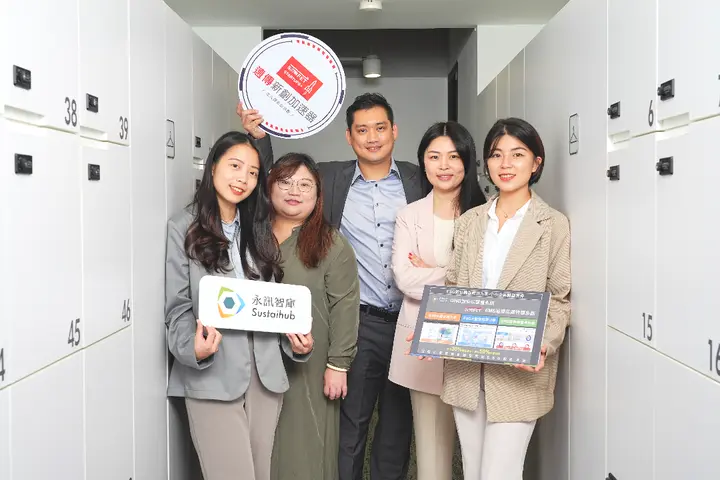
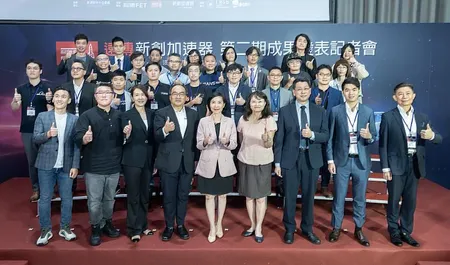
Sustaihub team at FET Startup Accelerator

Sustaihub, a Phase 2 team of the FET Startup Accelerator, combines ESG and AI to provide enterprises with a one-stop ESG intelligence platform, effectively helping enterprises reduce report production costs by 30% and cut production time by 50%, attracting heavyweight clients such as ASUS, FET Electronic Toll Collection, Taiwan Textile Research Institute, and Taichung Veterans General Hospital. Founder and CEO Lee Chen-pei stated that in fact, the corporate net-zero carbon reduction pathway is divided into three stages: carbon inventory, carbon reduction, and carbon neutrality. "With Sustaihub alone, we can only achieve the first step. To move toward carbon reduction, we must integrate FET's energy management system. Only by mastering data and reduction plans can we help enterprises plan a complete carbon neutrality pathway."

Sustaihub is precisely targeting FET's deployment in smart energy management solutions. "We developed our past consulting know-how into a system that can be quickly applied to SME scenarios, complementing our cooperation with FET to provide dual-axis transformation solutions for digital and sustainability." Lee Chen-pei admitted that startups often face four major obstacles: "insufficient sales manpower," "difficulty finding suitable contacts when connecting with enterprises," "insufficient brand awareness," and "immature distribution models." Joining the FET Startup Accelerator can address these pain points.

FET IT and Digital Transformation Technology Group Smart City Solutions Division Associate Director Chang Wen-chin stated that from RE100 (100% renewable energy use), EP100 (100% increase in energy efficiency), to EV100 (100% electrification of transportation) - all three major global environmental organization initiatives are inseparable from energy management system (EMS) usage. FET is Taiwan's largest energy management operator, serving over 100,000 enterprise customers nationwide. In the future, FET's energy management system will integrate suitable startup solutions to continue strengthening the ESG net-zero ecosystem and provide better services to enterprise customers.

ESG has now become an important issue that all enterprises must face. Behind the challenges lie tremendous business opportunities. FET helps startup partners create better products and expand business opportunities. From now until December 29, the FET Startup Accelerator Phase 3 is actively recruiting, welcoming outstanding startups from all fields to apply and accelerate becoming Taiwan's next unicorn.

Business Today article link: FET Leads by Example, Partners with 3 Startup Champions to Build Net-Zero Ecosystem
Want to learn more about sustainability report preparation?

Book a free consultation. Our professional consultants will plan the best solution for you.

Related Articles

遠傳新創加速器成立二年成果豐碩合創上億新商機.jpg

Sep 20, 2023

FET Partners with Sustaihub to Launch SME Sustainability Transformation Package Integrating Energy Management and Carbon Inventory Systems

In the post-pandemic era, companies face greater challenges in technological capabilities and development flexibility. FET has taken a forward-looking approach by establishing the FET Startup Accelerator to discover Taiwan's next 'national champion.' Today (September 20), they held the Phase 2 Demo Day, where the accelerated startup teams demonstrated outstanding achievements across five major fields: ESG Net Zero, Smart Healthcare, Smart Retail, Smart City, and Finance & Insurance. Government officials including MODA Digital Industries Department Director General Lu Zheng-hua, NDC Industrial Development Division Deputy Director Chen Qiong-hua, MOEA SME Administration Deputy Director Wu Jia-ying, and National Development Fund Deputy Executive Secretary Tsai Yi-chien attended to witness and support the startup teams.
ESG、CSR差異3

Nov 22, 2024

COP29 Insights: How Carbon Inventory Transforms from Compliance to Competitive Advantage

Against the backdrop of global decarbonization trends and rapid development of international carbon markets, carbon inventory has long transcended being merely a compliance requirement—it has become a critical task determining an enterprise's future competitiveness. Accurate data, transparent management, and efficient solutions will be the core weapons for enterprises to stand out in the carbon market.
永訊智庫_新增500家企業列強制碳盤查

Jan 10, 2025

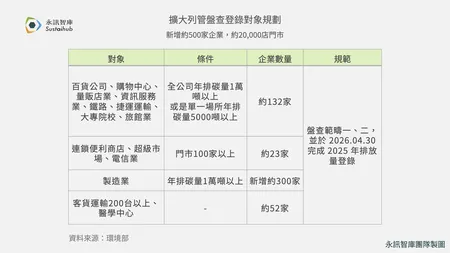
500 Additional Companies Subject to Mandatory Carbon Inventory with 2030 Emission Reduction Target Up to 30%

Taiwan's new 2030 emission reduction target is a 28% reduction plus or minus 2 percentage points compared to the baseline year 2005, while also expanding the scope of mandatory carbon inventory registration.
A man signing a doc for withdrawing from Paris Agreement

Feb 07, 2025

Trump Announces Paris Agreement Withdrawal Again, Yet It's the Perfect Opportunity for Taiwan Enterprises to 'Overtake' Major Players?!

On January 20, 2025, with the announcement of the US withdrawal from the Paris Agreement, global carbon reduction efforts faced significant impact. As the world's second-largest carbon emitter, the US's reduced commitment to climate agreements not only weakens the coordination of international cooperation but may also cause some countries and enterprises to relax their carbon reduction efforts. However, supply chain pressure has not diminished, especially as the EU and other regions maintain strict carbon emission management requirements, with global brands and purchasers still requiring supply chain partners to maintain high-standard carbon inventory capabilities.
Pay Carbon Fee

Mar 21, 2025

[2025 Carbon Fee Guide] How Enterprises Can Reduce Carbon Fees from NT$300 to NT$50 Through Voluntary Reduction Plans

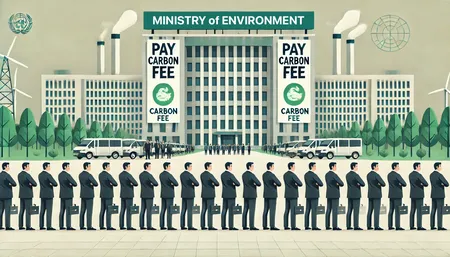
With the Climate Change Response Act officially in effect, the carbon fee system has become one of the operational costs that Taiwanese enterprises must take seriously. Companies subject to government-regulated carbon fee collection, including power, gas supply, and manufacturing industries with annual direct or indirect greenhouse gas emissions reaching 25,000 metric tons of CO₂e, will need to pay carbon fees of up to NT$300 per ton of CO₂e. Facing carbon fee pressure, the key for enterprises to reduce payment amounts lies in proposing and passing a 'Voluntary Reduction Plan,' which qualifies them for preferential rates of NT$50 or NT$100 per ton. This article explains how systematic planning and reporting for voluntary reduction plans can not only legally save expenses but also help enterprises with long-term net-zero planning.