Carbon Emission Management
There are 5 results for "Carbon Emission Management"
Articles related to Carbon Emission Management
-
Carbon Inventories for Four Sectors: A Guide to Taiwan's New Ministry of Environment Calculator and Guidance
Following the policy direction of its March 2025 announcement expanding carbon inventory coverage, the Ministry of Environment released greenhouse gas inventory guidance on July 14, 2025 for four sectors: services, transport, medical institutions, and universities and colleges. It also introduced a carbon emissions calculator to help organisations make preliminary estimates. This update is a major benefit for regulated organisations, substantially lowering the administrative cost of inventory work. This article walks through all the details.
-
CCUS Carbon Capture Technology: Greenwashing Risks Businesses Must Know Before Procurement
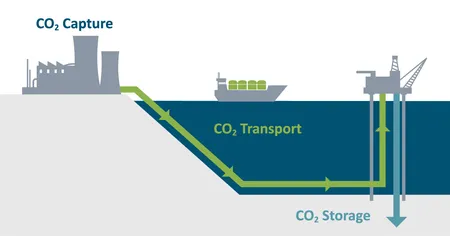
As the world moves toward net-zero emissions, businesses are seeking various carbon reduction solutions to achieve ESG goals. Among them, Carbon Capture, Utilization and Storage (CCUS) technology has been included in national carbon reduction strategies by many countries because it can directly handle carbon dioxide. However, controversy over this technology is growing, and businesses that hastily procure without adequate understanding may fall into 'greenwashing' risks.
-
From Trump's Paris Agreement Exit to Taiwan's 2050 Net-Zero Commitment: New Priorities for Supply Chain Decarbonisation
The US withdrawal from the Paris Agreement took effect on January 27, 2026. Although this appears to weaken the global consensus on climate governance, ESG has already become embedded in the operating culture of leading international companies. Taiwan has also reaffirmed its direction: at a National Climate Change Committee meeting, President Lai Ching-te made clear that Taiwan's 2050 net-zero goal would not waver with international political changes. More significantly, on August 25, 2026, the Ministry of Environment announced the Regulations Governing the Storage of Captured Carbon Dioxide, marking a turning point for supply chain decarbonisation and Scope 3 management. This article explains how companies can seize this transition opportunity.
-
Choose a starting point for the task you are working on
Find peer reportsSustainability Report DatabaseSearch Taiwanese corporate ESG reports for free (10,000+ reports).Find peer reports → Selection guideTaiwan ESG Reporting Software Selection GuideCompare the features and costs of ESG reporting systems before deciding which tool to use.Read the selection guide → SyberCoordinate disclosure with SyberChapter ownership, data collection, AI drafts, and review records.See the Syber reporting workflow → -
Trump Announces Paris Agreement Withdrawal Again, Yet It's the Perfect Opportunity for Taiwan Enterprises to 'Overtake' Major Players?!
On January 20, 2025, with the announcement of the US withdrawal from the Paris Agreement, global carbon reduction efforts faced significant impact. As the world's second-largest carbon emitter, the US's reduced commitment to climate agreements not only weakens the coordination of international cooperation but may also cause some countries and enterprises to relax their carbon reduction efforts. However, supply chain pressure has not diminished, especially as the EU and other regions maintain strict carbon emission management requirements, with global brands and purchasers still requiring supply chain partners to maintain high-standard carbon inventory capabilities.
-
How to Deliver a Twin Transition: Five Actions and Corporate Examples Linking Digitalisation and Sustainability
To succeed in the future, companies need to deliver sustainability solutions through digital technology. Research shows that businesses pursuing a twin transition are 2.5 times more likely than others to perform strongly. This article explores how digital transformation and sustainability can strengthen competitiveness, with practical examples and implementation strategies to help companies stand out in a rapidly changing business environment.