Why Should You Stop Using Version 6.0.4 Emission Factors?
Ministry of Environment Clearly Specifies: Not Applicable for Regulated Enterprises
According to Ministry of Environment announcements, all regulated enterprises (companies required by law to report GHG emissions) can no longer use version 6.0.4 emission factors, otherwise it will affect report legality and accuracy.
📌 Regulated Enterprises: Should immediately switch to the latest emission factors announced on February 5, 2024, to avoid violations.
FSC-Regulated and Voluntary Disclosure Entities: Use with Caution
For companies required by the FSC to make ESG disclosures, and organizations voluntarily conducting GHG inventories, the Ministry of Environment has not mandated against using version 6.0.4, but still recommends careful evaluation and prioritizing the latest emission factors to ensure data accuracy.
📌 FSC Disclosure Entities & Voluntary Disclosers: May choose based on needs, but recommend using latest data to align with international trends.
Practical Example
If a company originally used version 6.0.4 diesel GHG emission factors (CO₂: 2.6060, CH₄: 0.000137, N₂O: 0.000137) for company vehicle fuel carbon inventory, when switching to the latest announced "GHG Emission Factors" with Year 113 automotive diesel lower heating value, the corresponding emission factors become:
- CO₂ emission factor: 2.6811
- CH₄ emission factor: 0.0001411
- N₂O emission factor: 0.0001411
Although the data variation may appear small, when multiplied by the company's fuel consumption (activity data), the final carbon emissions may show significant changes. Therefore, companies must carefully evaluate during carbon inventory and emission reporting to ensure data complies with latest regulations and standards, avoiding potential calculation errors and compliance risks.
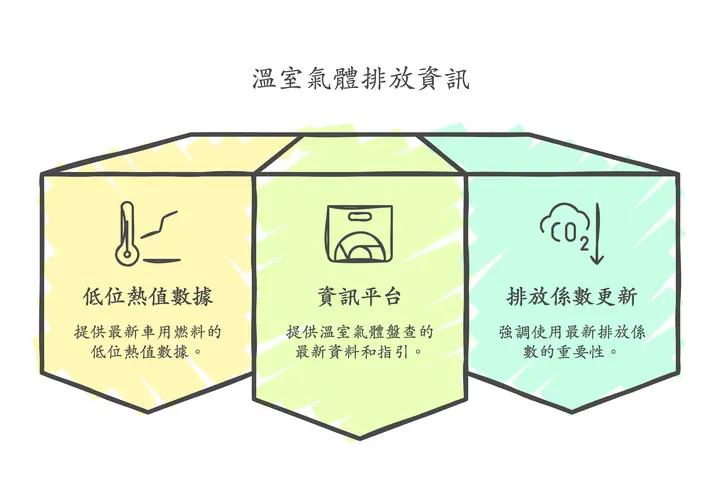
Year 113 Automotive Gasoline and Diesel Lower Heating Value Data
To help companies calculate GHG emissions more accurately, the Ministry of Environment has announced Year 113 automotive fuel lower heating values based on the latest data from domestic gasoline and diesel sellers:
- Automotive gasoline lower heating value: 7609 kcal/L
- Automotive diesel lower heating value: 8642 kcal/L
These data will affect company calculations of carbon emissions from fuel combustion, so be sure to update in carbon inventory reports to avoid accuracy issues from outdated data.
Where Can You Get the Latest GHG Inventory Information?
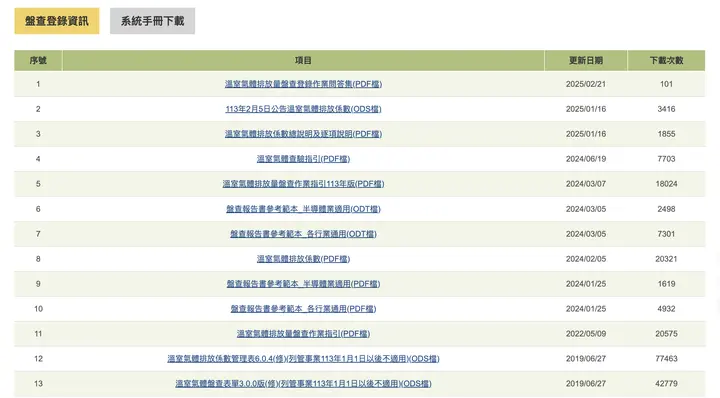
When conducting GHG inventories, companies should stay current with the latest information to ensure compliance with Ministry of Environment regulations. The Ministry of Environment's Climate Change Administration "Enterprise GHG Emissions Information Platform" provides rich reference resources, including:
- Year 113 Latest GHG Emission Factors (ODS file)
- GHG Inventory Guidelines (Year 113 version)
- Inventory Report Reference Examples
📌 Download Area: Get the latest information from the Ministry of Environment Climate Change Administration official website 👉 Enterprise GHG Emissions Information Platform
Sustaihub Cloud Carbon Detection System: Always Updated with Latest Emission Factors, Reducing Your Carbon Inventory Troubles!
When conducting carbon inventories, companies fear most using outdated data, causing reports to be non-compliant or even affecting ESG ratings. Our Cloud Carbon Detection GHG Inventory System has been updated with the latest Ministry of Environment emission factors, ensuring users get the most timely and accurate data without manual updates, reducing error risks!
🌱 Why Choose Cloud Carbon Detection?
✔ Real-time Updates: Synchronized with Ministry of Environment's latest emission factors for compliant data
✔ Smart Calculation: Precisely calculate carbon emissions, reducing manual operation errors
✔ Automated Reports: Generate inventory reports meeting Ministry of Environment and FSC requirements
📌 Start Using Now 👉 Try Cloud Carbon Detection System