
From Digital Transformation to AI Transformation: Sustaihub's Four ESG AI Questions at the 2026 Far EasTone Sustainable Technology Summit
The 2026 Far EasTone Sustainable Technology Summit took place on August 28 at the Asia-Pacific Sustainability Expo. Sustaihub CEO Lucas Lee introduced four ESG AI questions: Does it align with standards? Can the source be found? Is responsibility clear? Can the result pass review? He explained how companies can assess the credibility of ESG AI answers. This article also outlines the three-phase implementation schedule for IFRS Sustainability Disclosure Standards.
What to decide after reading If you came for IFRS, SASB, TCFD, GRI, or ESG reporting requirements, the next step is to turn disclosure items into data collection, section assignments, and review workflows.
Table of Contents
- What the Forum Covered
- In ESG, Evidence Matters More Than Speed
- First: Regulation—Sustainability Information Must Be Published Alongside Financial Reports
- Second: Customers and Supply Chains—CDP, RBA and EcoVadis
- Sustaihub's Forum Framework: Four ESG AI Questions
- 01 | Does It Align with Standards?
- 02 | Can the Source Be Found?
- 03 | Is Responsibility Clear?
- 04 | Can the Result Pass Review?
- Putting the Four Questions into Everyday Work
- Far EasTone's Strategic Investment in Sustaihub
- Three Practical Recommendations for Companies Evaluating ESG AI
- 1. Put Acceptance Criteria into the Evaluation Form
- 2. Establish Data Ownership Before Discussing Automation
- 3. Document the Boundary Between AI and Human Work
- Frequently Asked Questions
- When Will IFRS S1 and S2 Apply to Our Company?
- How Do the Four ESG AI Questions Differ from a General AI Tool Evaluation?
- Can We Adopt AI Before Our ESG Data Is Organised?
- How Does the Syber Sustainability AI Agent Differ from General Report-Writing Tools?
- Related Reading
- Sources
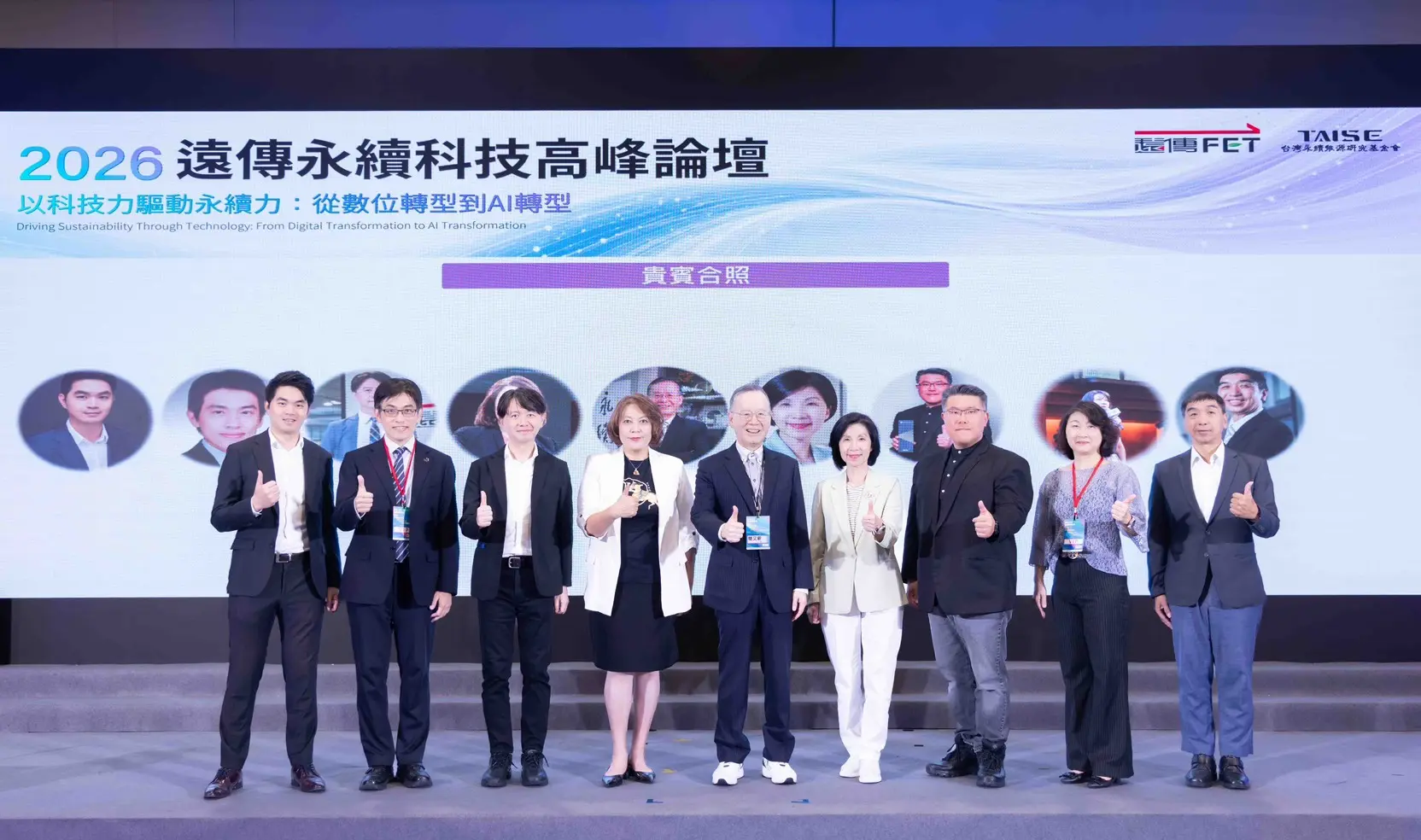
On August 28, 2026, the “2026 Far EasTone Sustainable Technology Summit”, jointly hosted by Far EasTone Telecommunications and the Taiwan Institute for Sustainable Energy, took place at the Asia-Pacific Sustainability Expo. Its theme was “Driving Sustainability Through Technology: From Digital Transformation to AI Transformation”. Invited speaker and Sustaihub CEO Lucas Lee addressed a question less often asked amid the AI boom: however quickly AI generates ESG answers, how can companies prove those answers are credible?
At the forum, Far EasTone's president, CIO and smart city team all described the same sequence: establish usable data first, then consider what AI can do. In ESG, that requirement is stricter. IFRS Sustainability Disclosure Standards apply in three phases beginning in fiscal year 2026 (ROC year 115), with sustainability information published alongside financial reports. Combined with customer requirements under CDP, RBA and EcoVadis, this means every AI-generated answer will face questions about its basis. Sustaihub introduced four ESG AI questions: Does it align with standards? Can the source be found? Is responsibility clear? Can the result pass review?
What the Forum Covered
In her opening remarks, Far EasTone President Chee Ching noted that digital transformation and AI transformation involve changes to business models and process thinking, beyond technology adoption. She explained how Far EasTone embeds sustainability strategy in its core operations, combining AI, 5G and ICT capabilities to advance operational efficiency, governance, environmental outcomes and social value.
Far EasTone CIO Hu Te-min spoke on “Driving Sustainability Through Technology: Far EasTone's Digital Transformation Journey”. He explained how the company adopts generative AI, cloud platforms and data governance capabilities, then turns them into replicable enterprise solutions spanning transport, healthcare, education, disaster prevention and care in remote communities.
Far EasTone Associate Vice President of Smart City Solutions Chang Wen-chin presented “AI x Green ICT: Building New Engines for Smart Governance and Net-Zero Transformation”. He described how traffic signals, water monitoring and smart meters can connect with IoT, 5G and cloud platforms to form smart city systems supported by AI analysis and autonomous operations. Disaster-resilient microgrids were one concrete example: AI manages energy allocation to keep evacuation centres operating during disasters.
All three presentations shared a common sequence: Establish usable data first, then consider what AI can do. This is also the question Sustaihub wanted to explore further in ESG.
In ESG, Evidence Matters More Than Speed
Over the past two years, corporate AI adoption has moved from content generation towards AI agents capable of performing work. In most settings, speed creates value. ESG is an exception, because pressure is rising simultaneously from two directions.
First: Regulation—Sustainability Information Must Be Published Alongside Financial Reports
On January 20, 2026, Taiwan's Financial Supervisory Commission (FSC) issued a press release reminding TWSE/TPEx-listed companies of the implementation schedule for IFRS Sustainability Disclosure Standards. Under rules issued on November 12, 2025 (ROC year 114), all such companies adopt the standards in three phases according to paid-in capital:
| Paid-in Capital | Applicable Fiscal Year | First Filing Year |
|---|---|---|
| NT$10 billion or more | From FY2026 (ROC year 115) | From 2027 (ROC year 116) |
| NT$5 billion to less than NT$10 billion | From FY2027 (ROC year 116) | From 2028 (ROC year 117) |
| Less than NT$5 billion | From FY2028 (ROC year 117) | From 2029 (ROC year 118) |
The FSC also explained that paid-in capital is assessed at “the end of the reporting period of the fiscal year for which sustainability-related financial information is prepared”. First-phase companies are therefore determined by whether their paid-in capital reaches NT$10 billion at the end of 2026 (ROC year 115). Companies close to the threshold should take particular care to confirm their applicable phase.
Under the FSC's adoption roadmap, Taiwan directly adopts IFRS S1 and S2 issued by the ISSB. Sustainability information is disclosed in the annual report for shareholders' meetings under the IFRS Sustainability Disclosure Standards and published alongside financial reports. The implication goes beyond the timetable itself: Sustainability information is moving from an annual publication to information scrutinised alongside financial reports. The way financial reports are examined and questioned will increasingly apply to sustainability information too.
Second: Customers and Supply Chains—CDP, RBA and EcoVadis
CDP environmental disclosure, the Responsible Business Alliance (RBA) Code of Conduct and EcoVadis sustainability assessments each use different questions and evidence formats. Yet their follow-up questions point in the same direction: Where did this number come from? Who calculated it? Has anyone reviewed it?
Together, these pressures mean companies need more than an answer that sounds reasonable. Answers must be traceable, verifiable and usable.
Sustaihub's Forum Framework: Four ESG AI Questions
At the forum, Lucas Lee proposed four questions that turn the abstract concept of “credibility” into something companies can ask directly.
01 | Does It Align with Standards?
Which standard, indicator or customer requirement underpins this answer? Climate-related disclosures under IFRS S2, topic-specific GRI disclosures and EcoVadis questionnaire items have different definitions and boundaries. Without the corresponding standard reference, an answer cannot subsequently be cross-checked or handed to a verifier.
02 | Can the Source Be Found?
Which dataset, version and supporting evidence produced this number? Electricity consumption might come from a Taiwan Power Company bill, an energy management system or a form completed by a subsidiary. Their values and verifiability can differ. The source cited by AI must be visible.
03 | Is Responsibility Clear?
Which department provided this data, who updates it, and who explains it when questions arise? ESG data spans environmental health and safety, HR, procurement, finance and individual sites. Without responsibility assigned to a specific department, the same disputes will recur during every annual data collection cycle.
04 | Can the Result Pass Review?
What content has AI organised, and what still requires professional confirmation? Making this boundary clear is not excessive caution; it enables assurance providers and internal auditors to take over.
Putting the Four Questions into Everyday Work
For the framework to hold up, it must first work in our own product. Sustaihub has built these four questions into the workflow of the Syber Sustainability AI Agent. Disclosure structures, data sources, collaboration progress and review records remain in one work context, rather than being scattered across emails, cloud drives and independently maintained Excel files. In practice, this means three things:
- Integrate the data required by IFRS S1, S2, CDP, RBA and EcoVadis, mapping the same data point to different questions across frameworks without re-entering it.
- Link every answer to its supporting files and identify the data still missing.
- Retain records of who entered, changed and reviewed information, providing a trail for assurance and audits.
The difference lies not in how quickly AI writes, but in how quickly you can produce the evidence when asked.
Far EasTone's Strategic Investment in Sustaihub
Far EasTone has made a strategic investment in Sustaihub. The division of roles is straightforward: Far EasTone provides foundational AI, cloud and enterprise service capabilities and customer channels, while Sustaihub provides ESG data governance methodology and the Syber Sustainability AI Agent.
For enterprise customers, the practical change is to bring cross-department collaboration, evidence management and audit preparation into a single workflow, rather than chasing data just before the reporting deadline. The forum's theme was “From Digital Transformation to AI Transformation”. In ESG, that transition depends on sound data governance first.
Three Practical Recommendations for Companies Evaluating ESG AI
1. Put Acceptance Criteria into the Evaluation Form
When evaluating ESG AI tools, ask more than whether they can generate content. Add four questions: Which standard does it align with? Which data does it cite? Who is responsible? Who confirms it? Most tools' differences become apparent in these four areas.
2. Establish Data Ownership Before Discussing Automation
If data has no clearly responsible department, adopting AI will simply generate unowned numbers faster. This step often takes longer than selecting a tool, but it cannot be skipped.
3. Document the Boundary Between AI and Human Work
Clarify in advance which passages AI may draft and which require professional confirmation, so internal auditors and external assurance providers have a basis for their checks.
Frequently Asked Questions
When Will IFRS S1 and S2 Apply to Our Company?
According to the FSC's January 20, 2026 press release, TWSE/TPEx-listed companies with paid-in capital of NT$10 billion or more apply the standards from FY2026 (ROC year 115) and file from 2027 (ROC year 116). Those with NT$5 billion to less than NT$10 billion apply them from FY2027 (ROC year 116) and file from 2028 (ROC year 117). Those below NT$5 billion apply them from FY2028 (ROC year 117) and file from 2029 (ROC year 118). The threshold uses paid-in capital at the end of the reporting period of the fiscal year for which sustainability-related financial information is prepared.
How Do the Four ESG AI Questions Differ from a General AI Tool Evaluation?
General evaluations focus on feature coverage and generation speed. The four questions focus on answer traceability. Standards, sources, responsibility and review determine whether AI-generated content can withstand questions from assurance providers, customer auditors and regulators.
Can We Adopt AI Before Our ESG Data Is Organised?
Yes, provided the objective is appropriate. At this stage, AI's value lies in identifying gaps: questions without corresponding data, data without supporting evidence and fields without owners. It should not be used simply to generate external-facing copy directly.
How Does the Syber Sustainability AI Agent Differ from General Report-Writing Tools?
The difference is whether a verifiable trail is preserved. Beyond writing assistance, Syber retains disclosure structures, data sources, collaboration progress and review records in one system, allowing every answer to link back to its basis.
Related Reading
- 2026 IFRS Sustainability Disclosure Standards FAQ: S1, S2, Adoption Timelines and Scope 3
- GRI Global Trends Report 2025: Taiwan Leads with a 95% Adoption Rate
If you are preparing for first-time adoption of IFRS S1 and S2, or responding to CDP, RBA or EcoVadis, use the four ESG AI questions to examine your current workflow and identify which questions you cannot yet answer. Sustaihub's Syber Sustainability AI Agent keeps disclosure structures, data sources, collaboration progress and review records in one system, so every answer links back to its basis.
Explore the Syber Sustainability AI Agent Contact Our Advisory TeamSources
- Central News Agency: Riding the AI Transformation Wave—Far EasTone Sustainable Technology Summit Takes the Stage (August 28, 2026)
- FSC: Reminder to TWSE/TPEx-Listed Companies About the Implementation Schedule for IFRS Sustainability Disclosure Standards (Press release, January 20, 2026)
- Securities and Futures Bureau, FSC: Roadmap for Taiwan's Adoption of IFRS Sustainability Disclosure Standards (Presentation, November 6, 2023)
Forum coverage in this article is based on the Central News Agency report of August 28, 2026. Regulatory timelines follow the FSC's January 20, 2026 press release and adoption roadmap. Gregorian years accompany all ROC calendar years.
FAQ
View AllWhat international frameworks and standards does the system currently support?
Currently available templates include GRI, SASB, TCFD, TNFD, IFRS S1/S2, SDGs, and templates for Taiwan ESG filing and corporate governance evaluation. Available items depend on your current plan and version.
Can I use the system to draft my first sustainability report?
Yes. For a first report, the system does not replace judgment; it centralizes chapter structure, data owners, evidence, drafts, and review status to reduce cross-department back-and-forth.
How long will the system take to implement?
Syber is a cloud SaaS product, so initial setup can usually be completed quickly. Actual implementation depends on framework scope, user count, historical data, permissions, and whether consulting support is needed.
Turn Sustainability Disclosure into a Collaborative Workflow
Use Syber to manage section ownership, metric data, review records, and disclosure progress, turning IFRS, SASB, and GRI requirements into a team workflow.
How to decide the next stepTurn the disclosure requirements in the article into sections, data sources, and owners first. If collaboration, version control, or verification is involved, then evaluate whether a reporting workflow is needed.