Skip to content

Don't Know How to Conduct Carbon Inventory for Four Industry Types? Taiwan EPA Releases New Calculation Tools and Carbon Inventory Guidelines!

Following the policy direction of the expanded carbon inventory announcement in March this year, Taiwan's Ministry of Environment released greenhouse gas inventory guidelines for four industry types on July 14, covering service industries, transportation, medical institutions, and universities. Additionally, a carbon emission calculation tool was introduced to help businesses preliminarily calculate their carbon emissions. This update is great news for regulated businesses, significantly reducing the administrative costs required for inventory operations. This article will reveal all the details of this information.

環境部門牌

How Does This Announcement Help the Four Industry Types?

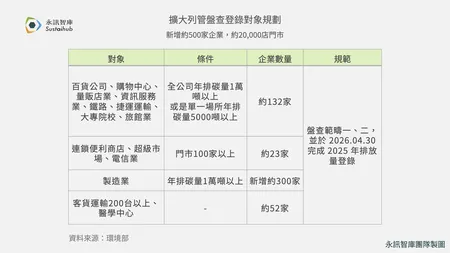
In response to the Ministry of Environment's expansion of "inventory subjects," among the four industry types mentioned, those meeting the conditions in Figure 1 below will need to report carbon emission data to the Ministry of Environment. Combined with the calculation tools and these "industry-specific" inventory guidelines, businesses can:

  1. Preliminarily determine whether they are subject to regulation
  2. Obtain clear and actionable assistance in inventory operations
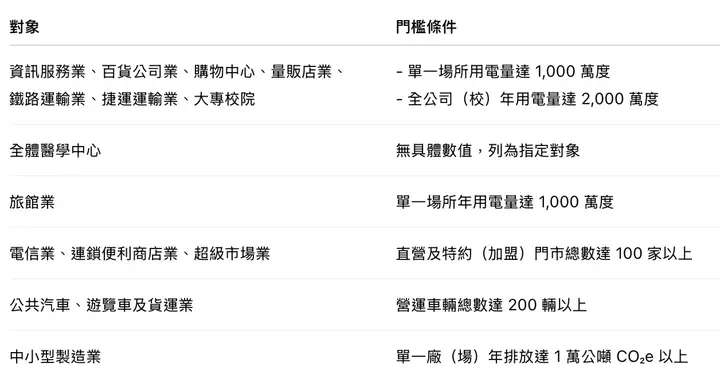
Figure 1: Ministry of Environment Announced Inventory Registration Subjects

Figure 1: Inventory registration subjects from Ministry of Environment's March 4, 2025 announcement

How Does the Calculation Tool Determine If a Business Meets Regulation Conditions?

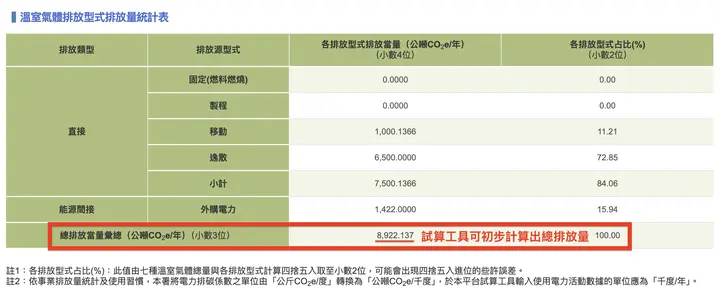
By selecting greenhouse gas emission sources and entering activity data, the calculation tool can help businesses generate Scope 1 and 2 carbon emission data. Combined with Figure 1 provided in this article, businesses can preliminarily determine whether they are subject to Ministry of Environment regulation.
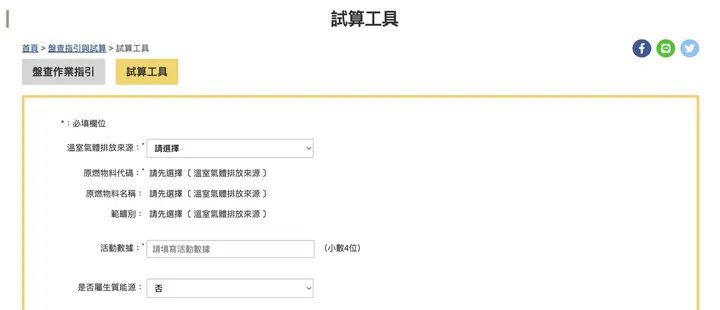
Ministry of Environment Calculation Tool

Figure 2: Calculation tool interface

Figure 3: Sample data results

Figure 3: Calculation results after data input

Source: Ministry of Environment calculation tool page

What Are the Key Differences in the New Inventory Guidelines?

Compared to the Ministry of Environment's previously released "2024 Greenhouse Gas Emission Inventory Operation Guidelines," the carbon inventory guidelines for four industries released this time mainly demonstrate the following features in practical operation:

  1. Targeted content design: Each carbon inventory guideline defines common emission sources and emission types for each industry based on operational characteristics. Even "inventory beginners" without experience can follow the guidelines to conduct inventory, helping users quickly grasp key points and reduce exploration costs.
  2. Provides calculation methods for industry-specific special items: Reference materials for calculation methods related to special items in each industry are often difficult to obtain. These guidelines address this situation by providing clear carbon inventory operation instructions.
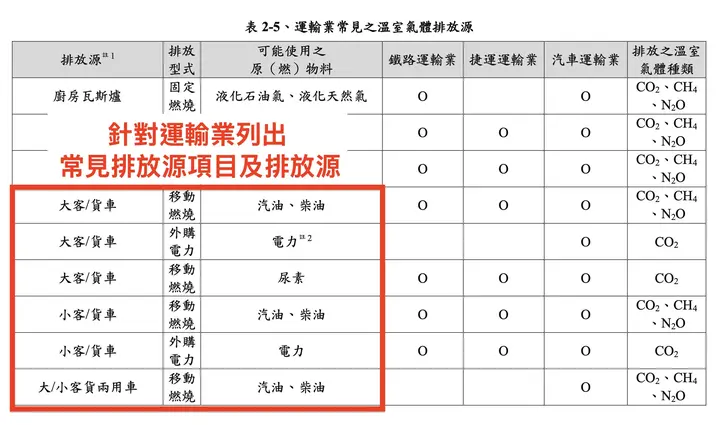
Figure 4: Common emission sources for specific industries
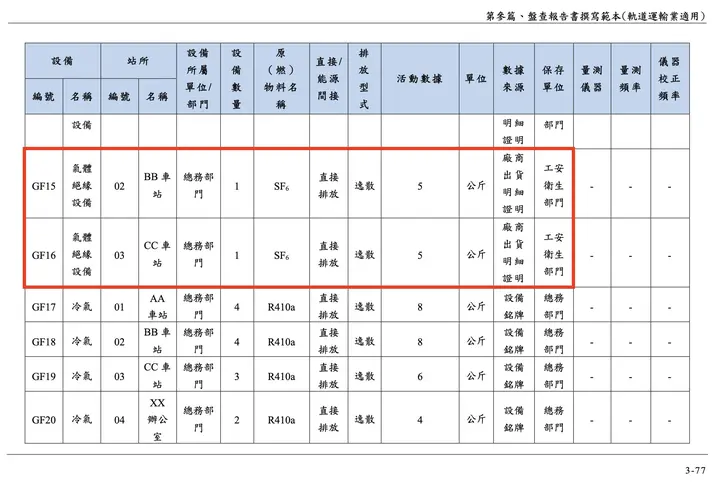
Figure 4: Common emission sources for specific industries

Figure 5: Emission source list example for specific industries
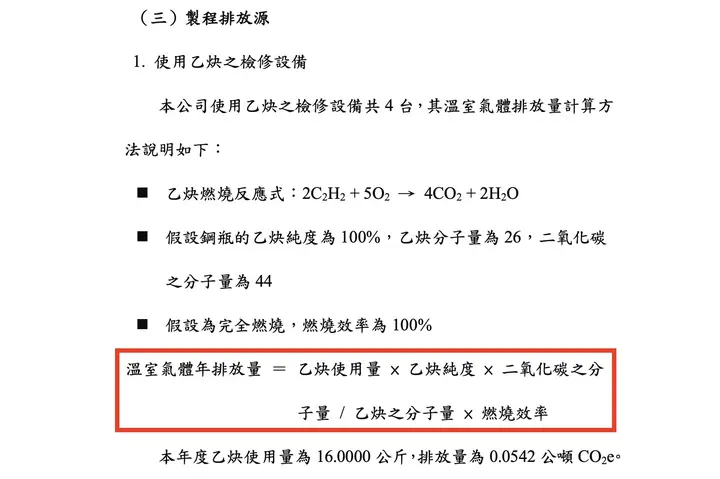
Figure 5: Emission source list example for specific industries

Figure 6: Calculation method instructions for industry-specific items

Figure 6: Calculation method instructions for industry-specific items

Source: Various industry inventory guidelines downloaded from Ministry of Environment inventory guidelines page

Regulatory Requirements and Reporting Schedule

If you meet the "inventory subject" conditions in Figure 1, you need to conduct greenhouse gas inventory operations, which means completing the 2025 carbon emission data inventory and reporting to the Ministry of Environment before April 30, 2026.

Where Can I Download the Guidelines?

The Ministry of Environment has publicly released greenhouse gas inventory guidelines for various industries, as well as calculation tools and operation manuals on the "Business Greenhouse Gas Emission Information Platform" for public use.

Carbon Inventory Regulations Are Here: What's Next for SMEs?

As the Ministry of Environment expands carbon inventory guideline announcements, it's clear that not only large enterprises but also small and medium-sized businesses will gradually be brought under management. Facing this trend, SMEs should refer to guideline content early, start inventorying data, and establish basic carbon inventory capabilities.

However, if you need not only preliminary carbon data calculations but also want to comprehensively grasp facility-wide carbon emission status and easily complete key tasks such as regulatory reporting and identifying emission hotspots, we sincerely recommend implementing Sustaihub's DCarbon Cloud Carbon System. This system can help you cover most inventory needs, significantly reduce administrative burdens, and effectively improve reporting efficiency to confidently respond to all Ministry of Environment requirements.

Carbon inventory doesn't have to start from scratch—combining appropriate digital tools is the key to standing firm in the carbon management era!

Want to know how to operate the Cloud Carbon System? ➜ Start Your Free Trial of the Inventory Platform Now!

References:

  • Ministry of Environment releases 4 types of inventory operation guidelines to help expanded inventory subjects grasp greenhouse gas emissions, Ministry of Environment, July 14, 2025

Want to learn more about sustainability report preparation?

Book a free consultation. Our professional consultants will plan the best solution for you.

Related Articles

上課實況

Dec 03, 2025

Food & Beverage ESG Promotion Association Partners with Sustaihub: Building Practical ISO 14064 Carbon Inventory Skills to Help Food Industry Create Their Own Inventory from Scratch

As consumers pay more attention to "green dining" and supply chains impose stricter ESG requirements, "sustainability" is no longer just an attractive slogan—it has become a survival issue that the food and beverage industry must face. However, on the road to transformation, working together is better than going it alone. This time, the Food & Beverage ESG Promotion Association (hereinafter referred to as "the Association") partnered with Sustaihub to transform this belief into concrete "data" and "competitiveness." On November 20 and 27, 2025, they invited professional instructors to conduct two ISO 14064-1 carbon inventory practical training sessions for Association members. This was not just a lecture, but a crucial step in helping SMEs in the food industry move from "wanting to do it" to "knowing how to do it," while fulfilling the Association's founding mission: "Every food and beverage brand can create long-term value for the environment, society, and business through sustainable actions."
1

Nov 26, 2025

How to Approach ESG Disclosure: Common Enterprise Challenges + Complete Digital Tool Guide

Learn ESG disclosure best practices from real consulting experience, and discover how digital tools can dramatically improve efficiency!
1701933978048

May 27, 2024

The Winning Strategy for Competitiveness and Sustainability: Digital × Sustainability Twin Transformation

To win in the future, companies need the ability to achieve sustainable solutions through digital technology. Research shows that companies implementing twin transformation are 2.5 times more likely to have strong future performance than other companies. This article explores how to combine digital transformation and sustainability to enhance competitiveness, sharing specific cases and implementation strategies to help companies stand out in today's rapidly changing business environment.
ESG、CSR差異3

Nov 22, 2024

COP29 Insights: How Carbon Inventory Transforms from Compliance to Competitive Advantage

Against the backdrop of global decarbonization trends and rapid development of international carbon markets, carbon inventory has long transcended being merely a compliance requirement—it has become a critical task determining an enterprise's future competitiveness. Accurate data, transparent management, and efficient solutions will be the core weapons for enterprises to stand out in the carbon market.
永訊智庫_新增500家企業列強制碳盤查

Jan 10, 2025

500 Additional Companies Subject to Mandatory Carbon Inventory with 2030 Emission Reduction Target Up to 30%

Taiwan's new 2030 emission reduction target is a 28% reduction plus or minus 2 percentage points compared to the baseline year 2005, while also expanding the scope of mandatory carbon inventory registration.