
Skip to content

Trump Announces Paris Agreement Withdrawal Again, Yet It's the Perfect Opportunity for Taiwan Enterprises to 'Overtake' Major Players?!

On January 20, 2025, with the announcement of the US withdrawal from the Paris Agreement, global carbon reduction efforts faced significant impact. As the world's second-largest carbon emitter, the US's reduced commitment to climate agreements not only weakens the coordination of international cooperation but may also cause some countries and enterprises to relax their carbon reduction efforts. However, supply chain pressure has not diminished, especially as the EU and other regions maintain strict carbon emission management requirements, with global brands and purchasers still requiring supply chain partners to maintain high-standard carbon inventory capabilities.

A man signing a doc for withdrawing from Paris Agreement

Supply Chain Demand Remains Strong

Even with loosening US policies, international supply chain demand continues to strengthen. The following factors support this trend:

  • Stability of Corporate Self-Set Goals: The carbon neutrality targets of large enterprises like Apple and Microsoft have become internalized as long-term strategies; revoking commitments would severely damage their brand reputation and market trust.
  • International Market Pressure: Policies such as the EU's Carbon Border Adjustment Mechanism (CBAM) require supply chain enterprises to provide detailed carbon emission data. If Taiwan enterprises can meet high standards, they can ride this momentum.
  • Investment Market Demand for ESG: Capital markets increasingly value ESG performance; ignoring sustainability goals may lead to investor trust crises.
  • Employee and Consumer Expectations: For younger generations, sustainability is an important factor in choosing brands and employers.
  • Irreversibility of Technological Development: Large enterprises have invested significant funds in green energy and carbon reduction technologies; they will only strengthen their focus on carbon management in the future.

Competitive Opportunities for Taiwan Enterprises

The loosening of US policies actually creates an "overtaking" opportunity for Taiwan enterprises. As some US companies may reduce their carbon reduction efforts, Taiwan enterprises can stand out through the following approaches:

  1. Demonstrate High-Standard Carbon Management Capabilities: Taiwan enterprises can introduce internationally certified carbon inventory standards (such as ISO 14064 or GHG Protocol), proactively accept third-party verification, and establish detailed and accurate emission data inventories and reports. By regularly publishing carbon emission reports, they can not only demonstrate their value in the supply chain but also increase opportunities for cooperation with global purchasers.
  2. Meet Strict Supply Chain Requirements: With the implementation of the EU Carbon Border Adjustment Mechanism (CBAM), upstream supply chain enterprises need to provide more transparent carbon emission data. If Taiwan enterprises can plan ahead and complete the integration of Scope 1, 2, and partial Scope 3 emission data through professional carbon inventory systems, they can quickly adapt to these new requirements and ensure they are not excluded from international markets due to lack of compliance.
  3. Fill International Market Gaps: Some US companies may stagnate in their carbon reduction efforts due to policy loosening, which provides Taiwan enterprises with the opportunity to fill market gaps. By actively committing to achieving net-zero emission targets, Taiwan enterprises can not only win the trust of international brands but also have the opportunity to become more reliable partners in the global supply chain, consolidating their position in high-value-added markets.

Conclusion

Although the US decision to withdraw from the Paris Agreement has caused fluctuations in international policy, the global carbon reduction trend is irreversible. For Taiwan enterprises, this is an opportunity to "catch up from behind" - when some US companies may reduce their efforts due to policy relaxation, Taiwan enterprises should seize this opportunity to consolidate their position in the international market with higher-standard carbon inventories and sustainability commitments.

As a leader in carbon inventory systems, Sustaihub can provide Taiwan enterprises with a one-stop solution, from data collection to report generation, comprehensively meeting all needs.

Click here to learn more now, and explore how to easily complete carbon inventory through Sustaihub's DCarbon system, paving the way to sustainability for your enterprise!

Reference:
Ignoring Global Warming, Trump Administration Withdraws from Paris Agreement Again - UDN United Daily News, 2025/01/21
Want to learn more about sustainability report preparation?

Book a free consultation. Our professional consultants will plan the best solution for you.

Related Articles

遠傳新創加速器成立二年成果豐碩合創上億新商機.jpg

Sep 20, 2023

FET Partners with Sustaihub to Launch SME Sustainability Transformation Package Integrating Energy Management and Carbon Inventory Systems

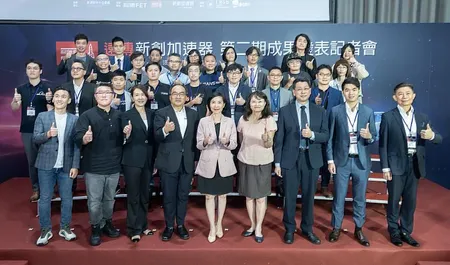
In the post-pandemic era, companies face greater challenges in technological capabilities and development flexibility. FET has taken a forward-looking approach by establishing the FET Startup Accelerator to discover Taiwan's next 'national champion.' Today (September 20), they held the Phase 2 Demo Day, where the accelerated startup teams demonstrated outstanding achievements across five major fields: ESG Net Zero, Smart Healthcare, Smart Retail, Smart City, and Finance & Insurance. Government officials including MODA Digital Industries Department Director General Lu Zheng-hua, NDC Industrial Development Division Deputy Director Chen Qiong-hua, MOEA SME Administration Deputy Director Wu Jia-ying, and National Development Fund Deputy Executive Secretary Tsai Yi-chien attended to witness and support the startup teams.
遠傳電信以大帶小攜手3新創精兵共築淨零生態系

Oct 20, 2023

FET Leads by Example, Partners with 3 Startup Champions to Build Net-Zero Ecosystem

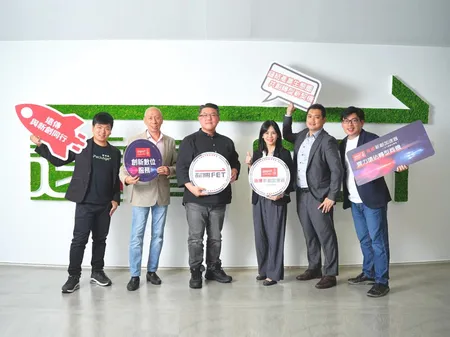
Net-zero carbon emissions by 2050 has become a global trend. Taiwan's Climate Change Response Act came into effect in February. According to the FSC's 'Corporate Governance 3.0 Sustainable Development Blueprint,' listed companies with paid-in capital exceeding NT$2 billion must submit corporate sustainability reports starting this year to strengthen disclosure of corporate sustainability and climate resilience information. To help enterprises move toward sustainability, the second FET Startup Accelerator has partnered with PackAge+, Sustaihub, and Yongcheng Intelligence - three startup champions - to successfully transform carbon anxiety into carbon business opportunities, leading smaller players to jointly build a net-zero ecosystem.
1701933978048

May 27, 2024

The Winning Strategy for Competitiveness and Sustainability: Digital × Sustainability Twin Transformation

To win in the future, companies need the ability to achieve sustainable solutions through digital technology. Research shows that companies implementing twin transformation are 2.5 times more likely to have strong future performance than other companies. This article explores how to combine digital transformation and sustainability to enhance competitiveness, sharing specific cases and implementation strategies to help companies stand out in today's rapidly changing business environment.
ESG、CSR差異3

Nov 22, 2024

COP29 Insights: How Carbon Inventory Transforms from Compliance to Competitive Advantage

Against the backdrop of global decarbonization trends and rapid development of international carbon markets, carbon inventory has long transcended being merely a compliance requirement—it has become a critical task determining an enterprise's future competitiveness. Accurate data, transparent management, and efficient solutions will be the core weapons for enterprises to stand out in the carbon market.
永訊智庫_新增500家企業列強制碳盤查

Jan 10, 2025

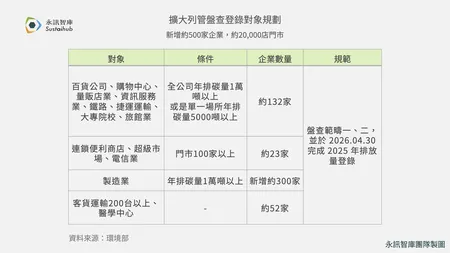
500 Additional Companies Subject to Mandatory Carbon Inventory with 2030 Emission Reduction Target Up to 30%

Taiwan's new 2030 emission reduction target is a 28% reduction plus or minus 2 percentage points compared to the baseline year 2005, while also expanding the scope of mandatory carbon inventory registration.