Carbon Inventory
There are 13 results for "Carbon Inventory"
Articles related to Carbon Inventory
-
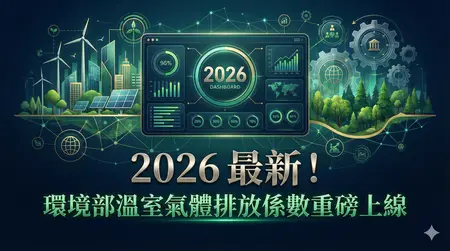
Taiwan's 2026 Greenhouse Gas Emission Factor Announcements: Checking Years, Sources and Units
Distinguish the 2026 announcement year from the 2025 (ROC year 114) activity year. Check factors by stationary or mobile combustion, fuel, gas and unit, and use diesel examples to organise calculation references and supporting evidence.
-
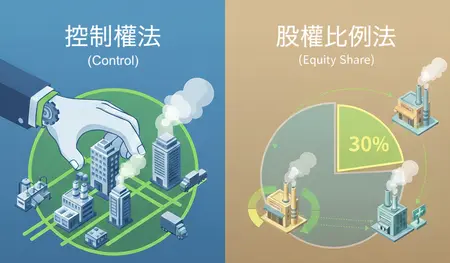
How to Choose the "Boundary Setting Method" for Carbon Inventory? Understanding Control Approach vs. Equity Share Approach
When executing a carbon inventory project, the first task is to define the "organizational boundary." If the boundary is unclear, which emission sources and activity data should be included often lacks consistent standards. This article explains operational control, financial control, and equity share approaches in plain language to help readers choose the appropriate method.
-
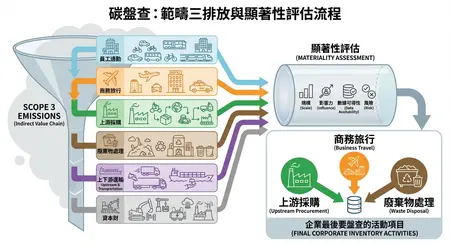
How to Conduct a Carbon Inventory 'Significance Assessment'? A Key Guide for Corporate Sustainability
When enterprises start a carbon inventory, most teams reach for data collection, tables and calculations first. But what really decides quality and efficiency is not "how much data" but "which emission sources are worth collecting." This step is called the carbon inventory Significance Assessment. A significance assessment acts as the steering wheel for the whole inventory: it helps you identify high-emission, high-risk, high-attention activities, focusing subsequent data collection and avoiding wasted time and effort. This article walks you through the purpose, indicators and procedure of significance assessment, and how to run it quickly through a system that connects directly to the rest of the inventory workflow.
-
Choose a starting point for the task you are working on
Find peer reportsSustainability Report DatabaseSearch Taiwanese corporate ESG reports for free (10,000+ reports).Find peer reports → Selection guideTaiwan ESG Reporting Software Selection GuideCompare the features and costs of ESG reporting systems before deciding which tool to use.Read the selection guide → SyberCoordinate disclosure with SyberChapter ownership, data collection, AI drafts, and review records.See the Syber reporting workflow → -
Food & Beverage ESG Promotion Association Partners with Sustaihub: Building Practical ISO 14064 Carbon Inventory Skills to Help Food Industry Create Their Own Inventory from Scratch
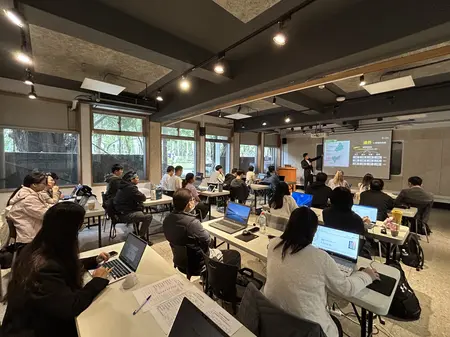
As consumers pay more attention to "green dining" and supply chains impose stricter ESG requirements, "sustainability" is no longer just an attractive slogan—it has become a survival issue that the food and beverage industry must face. However, on the road to transformation, working together is better than going it alone. This time, the Food & Beverage ESG Promotion Association (hereinafter referred to as "the Association") partnered with Sustaihub to transform this belief into concrete "data" and "competitiveness." On November 20 and 27, 2025, they invited professional instructors to conduct two ISO 14064-1 carbon inventory practical training sessions for Association members. This was not just a lecture, but a crucial step in helping SMEs in the food industry move from "wanting to do it" to "knowing how to do it," while fulfilling the Association's founding mission: "Every food and beverage brand can create long-term value for the environment, society, and business through sustainable actions."
-
How to Approach ESG Disclosure: Common Enterprise Challenges + Complete Digital Tool Guide
Learn ESG disclosure best practices from real consulting experience, and discover how digital tools can dramatically improve efficiency!
-
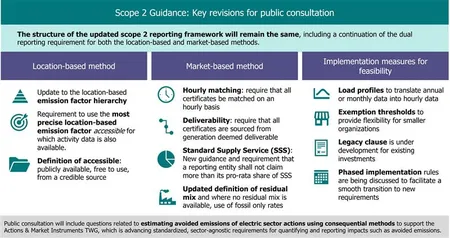
GHG Protocol September 2025 Update: Three Implications of Scope 2 Revisions for Corporate Electricity Inventories
The first public consultation on GHG Protocol Scope 2 Guidance revisions is complete. Proposals include hourly matching and deliverability, pointing towards more rigorous and transparent corporate electricity emissions calculations. This article examines the background, key differences and response strategies to explain the implications of this global change in electricity accounting.
-
Carbon Inventories for Four Sectors: A Guide to Taiwan's New Ministry of Environment Calculator and Guidance
Following the policy direction of its March 2025 announcement expanding carbon inventory coverage, the Ministry of Environment released greenhouse gas inventory guidance on July 14, 2025 for four sectors: services, transport, medical institutions, and universities and colleges. It also introduced a carbon emissions calculator to help organisations make preliminary estimates. This update is a major benefit for regulated organisations, substantially lowering the administrative cost of inventory work. This article walks through all the details.
-
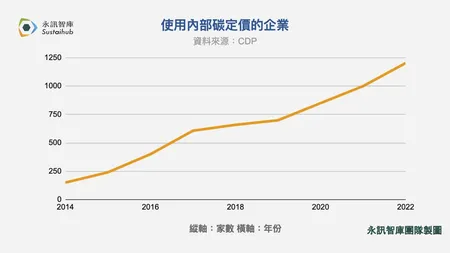
What Is Internal Carbon Pricing? Implementation Steps, Examples and Taiwan Carbon Fee Benchmarks
Growing global concern about climate change means companies face both external pressure and a need for internal change. Internal carbon pricing is an important sustainability tool that incorporates emissions costs into strategy and supports a low-carbon transition. Despite its clear benefits, implementation involves challenges including internal resistance, resource allocation and market volatility. This article explores how internal carbon pricing can help companies succeed in their green transition, with practical strategies and recommendations for balancing these challenges and achieving sustainable development.
-
From Trump's Paris Agreement Exit to Taiwan's 2050 Net-Zero Commitment: New Priorities for Supply Chain Decarbonisation
The US withdrawal from the Paris Agreement took effect on January 27, 2026. Although this appears to weaken the global consensus on climate governance, ESG has already become embedded in the operating culture of leading international companies. Taiwan has also reaffirmed its direction: at a National Climate Change Committee meeting, President Lai Ching-te made clear that Taiwan's 2050 net-zero goal would not waver with international political changes. More significantly, on August 25, 2026, the Ministry of Environment announced the Regulations Governing the Storage of Captured Carbon Dioxide, marking a turning point for supply chain decarbonisation and Scope 3 management. This article explains how companies can seize this transition opportunity.
-
[2025 Carbon Fee Guide] How Enterprises Can Reduce Carbon Fees from NT$300 to NT$50 Through Voluntary Reduction Plans
With the Climate Change Response Act officially in effect, the carbon fee system has become one of the operational costs that Taiwanese enterprises must take seriously. Companies subject to government-regulated carbon fee collection, including power, gas supply, and manufacturing industries with annual direct or indirect greenhouse gas emissions reaching 25,000 metric tons of CO₂e, will need to pay carbon fees of up to NT$300 per ton of CO₂e. Facing carbon fee pressure, the key for enterprises to reduce payment amounts lies in proposing and passing a 'Voluntary Reduction Plan,' which qualifies them for preferential rates of NT$50 or NT$100 per ton. This article explains how systematic planning and reporting for voluntary reduction plans can not only legally save expenses but also help enterprises with long-term net-zero planning.