Insights
Regulatory updates, carbon inventory and AI applications, IFRS adoption experience, corporate case studies, and system updates, written by our consultants and engineers.
-
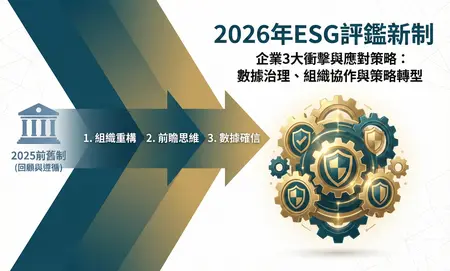
3 Major Impacts of Taiwan's 2026 ESG Rating Reform and Response Strategies
This article analyzes 3 core challenges under the new system and provides a consultant's checklist for data governance, organizational restructuring, and strategic transformation
-
Food & Beverage ESG Promotion Association Partners with Sustaihub: Building Practical ISO 14064 Carbon Inventory Skills to Help Food Industry Create Their Own Inventory from Scratch
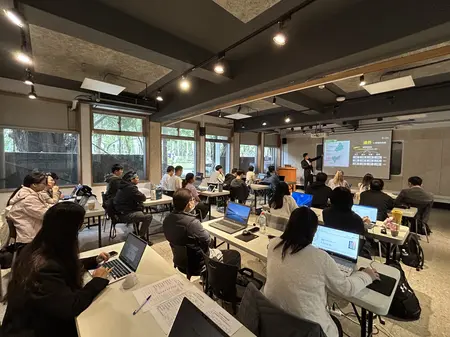
As consumers pay more attention to "green dining" and supply chains impose stricter ESG requirements, "sustainability" is no longer just an attractive slogan—it has become a survival issue that the food and beverage industry must face. However, on the road to transformation, working together is better than going it alone. This time, the Food & Beverage ESG Promotion Association (hereinafter referred to as "the Association") partnered with Sustaihub to transform this belief into concrete "data" and "competitiveness." On November 20 and 27, 2025, they invited professional instructors to conduct two ISO 14064-1 carbon inventory practical training sessions for Association members. This was not just a lecture, but a crucial step in helping SMEs in the food industry move from "wanting to do it" to "knowing how to do it," while fulfilling the Association's founding mission: "Every food and beverage brand can create long-term value for the environment, society, and business through sustainable actions."
-
How to Approach ESG Disclosure: Common Enterprise Challenges + Complete Digital Tool Guide
Learn ESG disclosure best practices from real consulting experience, and discover how digital tools can dramatically improve efficiency!
-
Sustaihub Exhibits at Singapore FinTech Festival, Accelerating ESG in Sustainable Finance
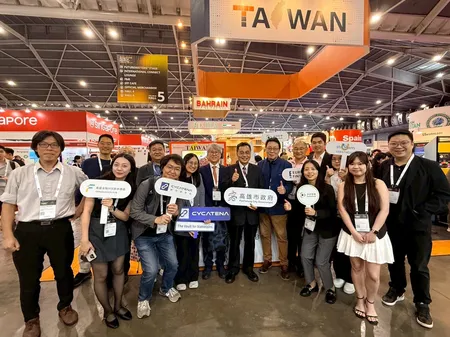
The Singapore FinTech Festival (SFF) continues to demonstrate its powerful influence as a global financial innovation hub. The event brings together major regulatory authorities, multinational banks, investment funds, insurance companies, and technology enterprises from around the world, focusing on sustainable finance, AI applications, RegTech, data governance, and cross-border finance. This positions Singapore's FinTech ecosystem as highly strategic within the region. Sustaihub attracted significant attention with its intelligent ESG solutions combining AI and SaaS technology, dedicated to creating the most comprehensive ESG digital transformation solutions. This year, with support from the Kaohsiung City Government, the company participated in the Singapore Fintech Festival and officially launched the new "Sustain AI Sustainable Finance Analytics Module".
-
TWSE ESG Evaluation Launches in 2026: 75 Indicators and Strategies for Listed Companies
An in-depth look at this major reform through its overall framework and the environmental (E), social (S) and governance (G) dimensions, highlighting the issues companies should prioritise.
-
How to Plan IFRS Sustainability Disclosure Standards Adoption: Steps and Recommendations
IFRS Sustainability Disclosure Standards are being introduced progressively, and adopting IFRS S1 and S2 is no simple task. To help companies prepare, the authorities have introduced an IFRS Sustainability Disclosure Standards Adoption Plan. How should companies implement it, and what preparations are needed at each stage? This article provides a clear, practical guide to its key elements.
-
Done in 3 Minutes! One-Click Instant Search for Benchmark Companies' Latest ESG Report Core Disclosures
A must-read for professionals and ESG newcomers! Say goodbye to dozens of hours of report comparison. Use Sustain AI to instantly search benchmark companies' disclosure levels on key topics like 'Internal Carbon Pricing' and 'TCFD' with one click. Free access!
-
Global Shipping Carbon Fee Delayed Another Year: Climate Politics and Industry Impact Behind IMO's Postponed Decision
On October 17, 2025, the International Maritime Organization (IMO) under the United Nations held a meeting in London. Originally scheduled to vote on whether to formally adopt the 'Global Shipping Carbon Fee' and 'Net-Zero Framework,' the vote was postponed by one year following a motion by Saudi Arabia, with 57 votes in favor and 49 against. What does this shipping carbon fee controversy reflect about international politics and economic realities? And what does it mean for businesses and global decarbonization progress?
-
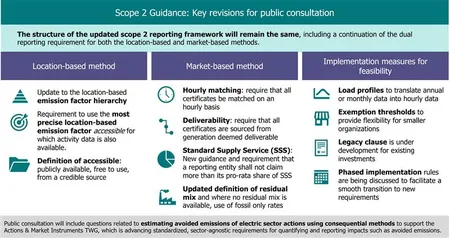
GHG Protocol September 2025 Update: Three Implications of Scope 2 Revisions for Corporate Electricity Inventories
The first public consultation on GHG Protocol Scope 2 Guidance revisions is complete. Proposals include hourly matching and deliverability, pointing towards more rigorous and transparent corporate electricity emissions calculations. This article examines the background, key differences and response strategies to explain the implications of this global change in electricity accounting.
-
How Are Japan and the EU Positioning Green Energy? Cross-National Comparison and Corporate Strategies (Part 2)
In the complex chess game of global energy transition, each country's strategic positioning is full of differences. Following the previous article's in-depth analysis of the important roles and development directions of the US and China in nuclear energy and natural gas, this article shifts its perspective to two key economies in Asia and Europe: Japan and the EU. We will explore how these two major blocs are formulating green energy deployment and energy transition pathways in response to their unique geographical, economic, and political environments. The article will also highlight the specific green energy strategies that Japanese and EU companies have adopted to ensure their leading position in global competition amid pressure for global net-zero emissions.