Insights
Regulatory updates, carbon inventory and AI applications, IFRS adoption experience, corporate case studies, and system updates, written by our consultants and engineers.
-
Taiwan Carbon Credits: Trading, Prices and a 10% Carbon Fee Example
In Taiwan, carbon credits usually refer to recognized reduction credits. From credit origins, official trading channels and historical listing prices to the 10% deduction cap and conversion ratios in the Regulations Governing the Collection of Carbon Fees, work out step by step where the credits you buy can actually be used.
-
Taiwan Carbon Fee: Rates and Deductions for a 100,000-Tonne Plant
The carbon fee is not simply total emissions multiplied by a rate. A hypothetical plant emitting 100,000 tonnes CO₂e a year shows how the K value, adjustment coefficient, the NT$300 and preferential rates, and the 10% cap on reduction credits affect the amount due, along with the end-of-May payment schedule.
-
GRI Global Trends 2025 Explained: Taiwan Leads with 95% Adoption—The Global Sustainability Reporting Landscape | Sustaihub
GRI published The State of Sustainability Reporting 2025 in June 2026, surveying 14,682 large listed companies worldwide: 40% use GRI Standards, representing 62% of global market capitalisation. Among jurisdictions with at least 20 companies in the sample, Taiwan ranks first with 95% adoption. This article examines international frameworks, regional shifts and Taiwan's regulatory adoption timelines.
-
What Is a Carbon Footprint? Calculation, Factors and Carbon Labels
A product carbon footprint answers how much one product emits, and the figure only makes sense alongside the product, unit, boundary and data period. Compare ISO 14067 with an organizational inventory, see how allocation and factor choices are made, find the official lookup sources, and understand the data window and 2-year validity that apply to Taiwan carbon label applications.
-
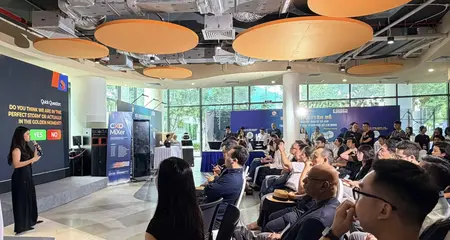
Sustaihub in Vietnam: Our Ho Chi Minh City Pitch and Six Takeaways
On July 30, 2026, Sustaihub attended two events in Ho Chi Minh City: Taiwan Tech Solution Day, hosted by Startup Island TAIWAN, where Sustaihub pitched in the AI solutions session; and BLOCK71 Vietnam's CXO Mixer, where we met nearly 200 local founders, corporate representatives and investors. That same day, Vietnamese financial media outlet VietnamFinance devoted a section of its coverage to Sustaihub. The purpose of the trip was not to measure how much we could sell, but to see whether the approach we have developed over ten years in Taiwan would also work in Vietnam. Here is what we saw, what people asked us, and the six conclusions we brought home.
-
GHG Inventory Registration in Taiwan: Who, Deadlines and Guidelines
Covered businesses must in principle register the previous year's inventory and report by April 30 each year, and those subject to verification must also upload verification results by October 31. Here is how to determine coverage, choose the right guidelines and factors, and map ISO 14064-1 Categories 1 to 6.
-
What Are Scope 1, 2 and 3? 15 Scope 3 Categories and ISO Mapping
Scopes 1, 2 and 3 classify emission sources by their relationship to the company. Learn how to assign each scope, how the 15 Scope 3 categories map to ISO 14064-1 categories, and what 2025 open data shows about gaps in Scope 3 disclosure among listed companies.
-
Green Jobs Hit a 10-Year High: Senior AI + Sustainability Roles Top NT$100,000 a Month—How to Close a 230,000 Skills Gap | Sustaihub
The H1 2026 Green Talent Employment Trends Report, jointly published by Taiwan's Ministry of Environment and 104 Job Bank, shows average monthly green job opportunities reaching 29,733 in the first half of 2026, repeatedly setting new records across ten years of statistics. Across the broader labour market, the gap is even larger: 820,000 vacancies require at least one green hard skill, but only 590,000 jobseekers have a corresponding skill. The 230,000 gap means around 28% (230,000÷820,000) of roles requiring green skills cannot immediately find suitable candidates. AI green jobs show an especially notable change: both recruiting companies and vacancies have increased by more than 2 times their original levels over five years, while the top-quartile (PR75) monthly salary in green software engineering and engineering R&D roles has reached NT$100,000. The report combines keywords from the Ministry's twelve key net-zero strategies with the 104 Job Bank database, using 1,631 keyword sets to analyse 484,000 recruiting companies and 9.276 million jobseeker members. Covering January 2017 to April 2026, it is currently Taiwan's most comprehensive official view of green employment. From employer and talent perspectives, this article explains why vacancies are at record highs, why gaps persist, how salaries are structured and why combined AI × ESG expertise is becoming a key asset in the net-zero transition.
-
Taiwan Carbon Inventory: Who Must Report, 5 Stages and Verification
A carbon inventory answers two questions: where do your emissions come from, and how much is there in total? Mandatory inventories, the carbon fee and customer requests each have their own criteria, and each of the five stages (boundary, sources, calculation, reporting, verification) should leave a traceable output. Sustaihub's review of 2025 sustainability reports from 2,023 listed companies found that 45.4% listed third-party verification or assurance.
-
TWSE's 2024 Sustainability Report Review Explained: 9 GRI Gaps and Climate Disclosure Recommendations
In May 2026 (ROC year 115), the Taiwan Stock Exchange (TWSE) and Taipei Exchange (TPEx) published the 2024 Sustainability Report Review Results and Disclosure Recommendations. The document compiles recurring disclosure gaps found in sampled TWSE/TPEx-listed company reports, with recommended wording and examples for each. It is not a ranking exercise, but a catalogue of common errors: the GRI disclosures most often flagged, obstacles in identifying material topics, and frequently incomplete sections of Appendix 2 climate-related information, all supported by statistics and examples. For teams preparing sustainability reports or approaching submission, the review provides an opportunity to check their work in advance. Following the official presentation's chapter order, this article reproduces original slides with commentary, covering nine GRI General Disclosure gaps, material topic weaknesses, eight climate information gaps and corresponding recommendations, and the IFRS Sustainability Disclosure Standards adoption timeline. All images are from the official TWSE presentation; figures and requirements remain subject to the latest TWSE, TPEx and FSC announcements.