Insights
Regulatory updates, carbon inventory and AI applications, IFRS adoption experience, corporate case studies, and system updates, written by our consultants and engineers.
-
Sustainability Report Assurance & Scope 3 Disclosure in Taiwan (2026)
In reporting year 2025, 45.4% of listed companies' sustainability reports list third-party verification or assurance and 25.5% were assured by CPA firms, with only 2 companies obtaining reasonable assurance. Among the 1,962 companies in the ESG open data, 65.6% disclose Scope 3. This page includes year-by-year and industry comparisons, a data pack and the calculation script.
-
Taiwan Sustainability Timeline: GHG, Carbon Fee, Reports, IFRS, ESG
Taiwan's sustainability regulations run on two tracks: information disclosure under the Financial Supervisory Commission system and carbon management under the Ministry of Environment. Eight schemes are set out here on a single timeline, with the competent authority, who is covered and the deadline for each, explains what each scheme means for companies in practice, and adds current data on sustainability report assurance.
-
How to Choose Carbon Inventory Software: 8 Questions Before You Buy
Before choosing a carbon inventory tool, be clear about what it is for: a rough estimate, answering customers, mandatory registration or preparing for verification. The 8 common questions below compare when Taiwan's Ministry of Environment (環境部) estimation tool, Excel, ESG platforms, dedicated systems and consultants fit, and include a comparison checklist you can use right away.
-
Choose a starting point for the task you are working on
Find peer reportsSustainability Report DatabaseSearch Taiwanese corporate ESG reports for free (10,000+ reports).Find peer reports → Selection guideTaiwan ESG Reporting Software Selection GuideCompare the features and costs of ESG reporting systems before deciding which tool to use.Read the selection guide → SyberCoordinate disclosure with SyberChapter ownership, data collection, AI drafts, and review records.See the Syber reporting workflow → -
IFRS Phase 3 Changes: Mandatory Adoption Reduced from 1,970 Companies to Around 560—Four FSC Transition Measures
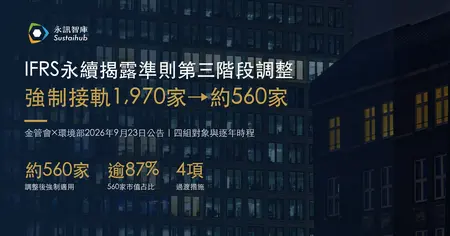
On 23 September 2026, the Financial Supervisory Commission (FSC) and Ministry of Environment announced changes to IFRS Sustainability Disclosure Standards coverage, reducing mandatory adoption among TWSE/TPEx-listed companies from 1,970 to around 560. Phase 3 companies need only disclose climate information for the first two years, with Scope 3 becoming voluntary. Phases 2 and 3 will be exempt from parent-only assurance, and the sustainability chapter filing deadline is proposed to extend to 14 days before the shareholders' meeting during transition. This article covers the four groups, annual timelines and preparation priorities.
-
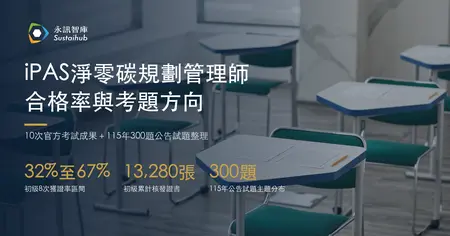
iPAS Net-Zero Carbon Planning Manager Pass Rates of 32%–67%: Results from 10 Exams and Question Topics
Official results from 8 elementary and 2 intermediate iPAS Net-Zero Carbon Planning Manager exams: elementary certification rates ranged from 32.05% to 67.43%, with 13,280 certificates issued. Subject One had a lower pass rate than Subject Two in 7 of 8 exams. Includes topic distributions for 300 questions in 6 published 2026 (ROC year 115) papers and a recommended study sequence. Individual registration for the third elementary exam closes at noon on September 22.
-
ESG Glossary: 27 Sustainability and Carbon Terms with Official Sources
27 common ESG and carbon management terms, organized into six groups: reporting, standards, inventory, assurance, carbon pricing and ratings. Each comes with a concise definition and its official source, and the glossary flags concepts that are often confused, such as carbon inventory and carbon footprint, net-zero emissions and carbon neutrality, and assurance and verification.
-
What Is Carbon Neutrality? ISO 14068 Update and Taiwan's Guidelines
A carbon neutrality claim needs an inventory, reductions, offsets and public evidence. From what a claim must contain and how ISO 14068 has changed to the credit conditions and legal status of the Ministry of Environment's guidelines, judge whether your data is ready for a public claim.
-
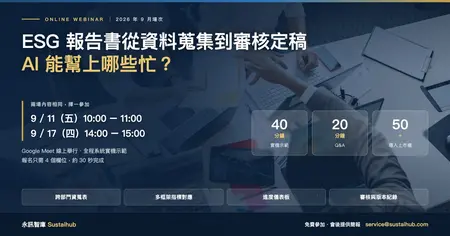
How Can AI Help with ESG Reporting, from Data Collection to Final Review? | September Webinar | Sustaihub
Join Sustaihub's free September 2026 ESG × AI webinars on Friday, 9/11 at 10:00 or Thursday, 9/17 at 14:00. A 40-minute live system demonstration covers cross-department data collection forms, automatic mapping of indicators from GRI, ISSB and other frameworks to report chapters, a report progress dashboard, review workflows and version records, followed by 20 minutes of Q&A. Presentation slides will be provided afterwards.
-
What Is Net Zero? Taiwan's 2050 Pathway, the Law and Corporate Targets
Net zero is a balance between emissions and carbon sinks, not zero emissions. From the pathway announced in 2022 and its enactment into law in 2023 to the SBTi version timeline, see where national targets end and corporate obligations begin, and how to prepare starting with an inventory.
-
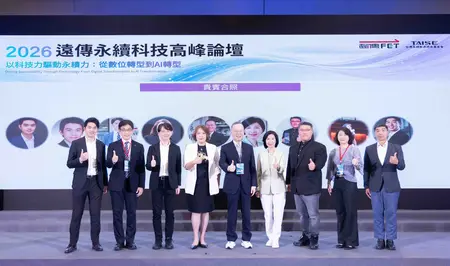
From Digital Transformation to AI Transformation: Sustaihub's Four ESG AI Questions at the 2026 Far EasTone Sustainable Technology Summit
The 2026 Far EasTone Sustainable Technology Summit took place on August 28 at the Asia-Pacific Sustainability Expo. Sustaihub CEO Lucas Lee introduced four ESG AI questions: Does it align with standards? Can the source be found? Is responsibility clear? Can the result pass review? He explained how companies can assess the credibility of ESG AI answers. This article also outlines the three-phase implementation schedule for IFRS Sustainability Disclosure Standards.